
Papas Arrugadas: Canarian Wrinkly Potatoes, Recipe and Mojo
What are papas arrugadas?
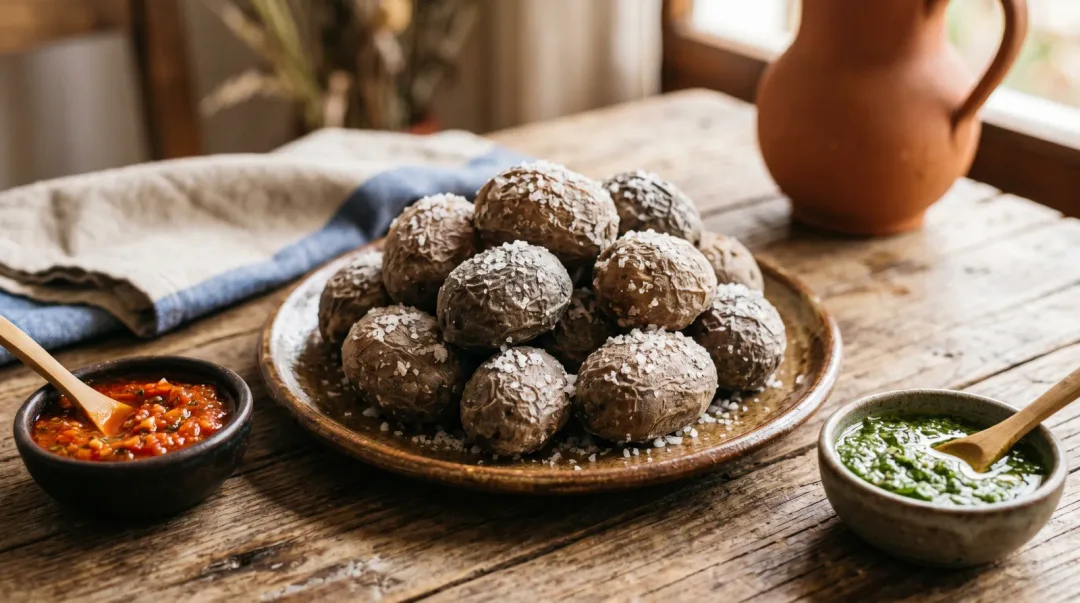
Papas arrugadas are small potatoes boiled in heavily salted water until the water cooks off and a thin white salt crust forms on the wrinkled skins. The name means "wrinkled potatoes". They are one of the most common dishes in the Canary Islands, served as a side or a tapa, almost always with mojo sauce, and you will see them on nearly every traditional menu in Tenerife.
The potatoes are eaten whole, with the skin on. The skin is part of the point: it holds the salt and gives the dish its texture.
The potatoes themselves
The Canary Islands grow old potato varieties that arrived from South America in the 16th century, not long after the conquest. Local types include papas bonitas, papas negras (black potatoes, with dark skin and yellow flesh) and papas coloradas. They are smaller than supermarket potatoes and have more flavour, which is why the dish works with so little seasoning.
You do not need a Canarian variety to make them at home. Any small, waxy potato of roughly even size works. Keep them small so they cook through and wrinkle properly.
How to make papas arrugadas
The method is simple and uses almost nothing but potatoes, water and salt.
Ingredients
- 1 kg small potatoes, unpeeled, similar in size
- 150 to 200 g coarse sea salt
- Water
Method
- Wash the potatoes well but do not peel them.
- Put them in a pot and add just enough water to barely cover them.
- Add the coarse salt. It looks like a lot, and it is. The traditional version used seawater.
- Boil for about 20 to 25 minutes, until a knife goes in easily.
- Pour off most of the water, leaving a little in the bottom.
- Return the pot to a low heat and shake it gently for a few minutes until the water evaporates and a thin white salt film forms on the skins. The skins will wrinkle.
- Serve warm, with mojo on the side.
That is the whole recipe. The salt crust is the signature, so do not rinse it off.
Mojo: the sauces that go with them
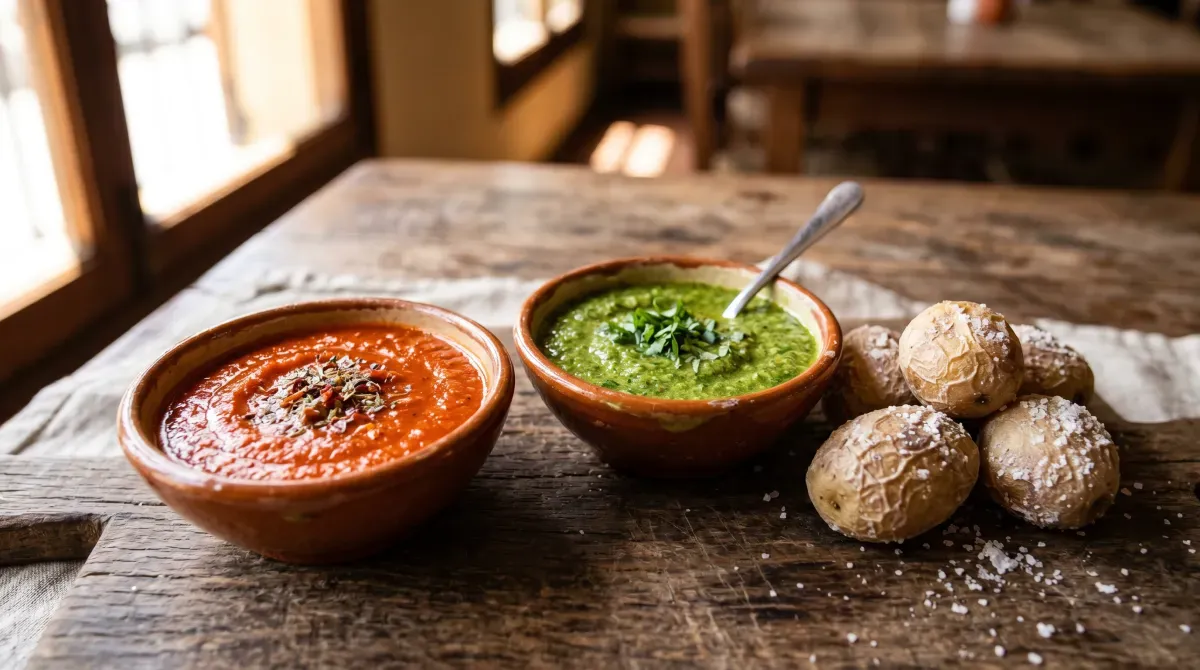
Papas arrugadas are almost never served plain. They come with mojo, a cold blended sauce. There are two classic kinds and most tables have both.
Mojo rojo (red). Garlic, dried red pepper or paprika, cumin, olive oil, wine vinegar and salt, blended into a loose sauce. A spicier version made with hot pepper is called mojo picón.
Mojo verde (green). Garlic, fresh coriander (sometimes parsley), green pepper, cumin, olive oil, vinegar and salt. Milder and fresher than the red, and the usual partner for fish.
Both keep for a few days in the fridge and are good on bread, fish and grilled meat too, not just the potatoes.
Where to eat papas arrugadas in Tenerife
You will find them almost everywhere, but the best versions are in traditional spots rather than tourist-strip restaurants. Look for a "guachinche", a small, informal Canarian eatery (originally a place where local winemakers sold their wine with a few simple dishes), most common in the north of the island around La Orotava, Icod and the wine areas. Village restaurants and the food stalls at local markets are also reliable. For more on local food and where to find it, see our guides to Canarian cuisine and the local markets of Tenerife.
Papas arrugadas questions
What are papas arrugadas? Small potatoes boiled in heavily salted water until a white salt crust forms on the wrinkled skin. They are a Canary Islands staple, eaten whole with the skin on and served with mojo sauce.
Why are they wrinkled and salty? The potatoes are cooked in a lot of salt with very little water. As the water boils off, the salt crystallises on the skin and the skin wrinkles. Traditionally seawater was used.
What is mojo? A cold Canarian sauce served with the potatoes. Mojo rojo (red) is made with garlic, pepper and paprika; mojo verde (green) is made with garlic and coriander or parsley. The spicy red version is called mojo picón.
Do you eat the skin? Yes. Papas arrugadas are eaten whole with the skin on, salt crust and all.
Are papas arrugadas vegan? The potatoes are just potatoes, water and salt, and both classic mojos are made with oil and vegetables, so the standard dish is vegan. Check in a restaurant if you are unsure how a particular mojo is made.