
Canarian cuisine: 20 typical dishes you must try in Tenerife
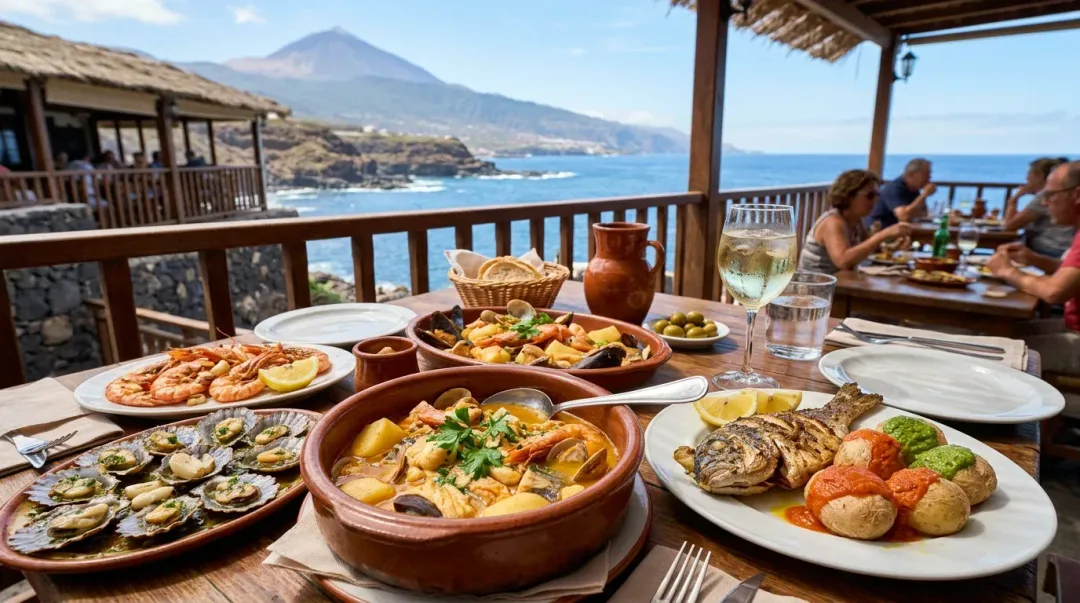
Canarian food is not Spanish food. It's a distinct cuisine with its own ingredients, techniques, and identity, shaped by the island's position at the crossroads of three continents: Europe (Spain), Africa (Morocco), and the Americas (the "Indianos" who returned from Cuba and Venezuela brought back ingredients and techniques). The result is simple, hearty, and deeply local food that almost nobody outside the islands has tried.
This guide covers the 20 most important traditional dishes of Tenerife, from the famous papas arrugadas to lesser-known specialities like escaldón de gofio and bienmesabe. Plus the fish, fruits, cheeses, drinks, and where to eat the real thing (hint: not in the resort hotels).
Papas arrugadas con mojo: the signature dish of Canarian cuisine
Papas arrugadas ("wrinkled potatoes") are the signature dish of the Canary Islands. Small local potato varieties (usually the native "papa negra", "papa bonita" or "papa de color") are boiled in heavily salted water until the skin wrinkles and develops a thin crust of sea salt. They're served unpeeled, with mojo sauce on the side.
The potato varieties are native to the Canary Islands and protected by a Denominación de Origen (Papas Antiguas de Canarias DOP). These varieties were brought from South America in the 16th century, before potatoes reached mainland Europe, making Canarian potatoes some of the oldest potato cultivars in Europe.
The two essential mojo sauces:
Mojo rojo (red mojo). Made with red pepper, garlic, cumin, paprika, olive oil, vinegar, and sometimes chilli (mojo picón). Rich, warm, slightly spicy. Traditionally served with meat dishes and potatoes.
Mojo verde (green mojo). Made with coriander (cilantro) or parsley, garlic, cumin, olive oil, and vinegar. Fresher and lighter. Traditionally served with fish and potatoes.
You'll find papas arrugadas in every Canarian restaurant, from the humblest guachinche to Michelin-starred establishments. The best ones have a thick crust of salt on the skin and the mojo is always made in-house.
Gofio: the ancient Canarian flour
Gofio is toasted cereal flour, and it's the oldest surviving food tradition in the Canary Islands. The Guanches (the pre-Hispanic indigenous inhabitants of Tenerife) ate gofio as their main staple, grinding roasted barley and other cereals with stone mills. The tradition continues today with almost the same method, just industrialised.
Modern gofio is usually made from roasted wheat, millo (maize), or a mix. It's sold in every supermarket in the Canary Islands and has Protected Geographical Indication (IGP) status.
How gofio is eaten:
- Mixed with warm milk as breakfast (popular for children)
- Kneaded with water, oil, and salt into "gofio amasado", eaten with cheese or sancocho
- Mixed into hot broth to make "escaldón" (see below)
- Incorporated into desserts like bienmesabe and frangollo
- Added to soups and stews as a thickener
- Mixed with honey to make "rapadura", a traditional sweet
Gofio is highly nutritious, rich in fibre, carbohydrates, iron, and B vitamins. It was the survival food of Canarian emigrants for centuries and remains a symbol of Canarian identity. If someone tells you "he creció a base de gofio" ("he grew up on gofio") they mean the person is genuinely Canarian.
Sancocho canario: the traditional fish stew
Sancocho is the most traditional Canarian fish dish, served during religious festivities (especially Easter) and family celebrations. It's a stew based on salted fish (usually cherne, meaning wreckfish), boiled with papas (potatoes) and batatas (sweet potatoes), served with mojo and gofio amasado (kneaded gofio paste) on the side.
The preparation takes patience: the salt fish must be soaked for 24 hours in cold water to remove excess salt before boiling. The contrast between the salty fish, the sweet batata, the spicy mojo, and the dense gofio is what makes sancocho unforgettable.
Outside of Easter, you can order sancocho year-round at traditional restaurants and guachinches in the north of the island. Don't confuse it with Latin American sancocho (also from Spanish-speaking countries, but different recipes).
Ropa vieja canaria: the leftovers dish that became a classic
Ropa vieja means "old clothes", the name coming from the appearance of the shredded meat. It was traditionally made from the leftovers of puchero (see below): the cooked meats (beef, chicken, pork) were pulled apart and sautéed with onion, garlic, red pepper, and tomato. Chickpeas from the original puchero are also added back in.
Today ropa vieja is often cooked from scratch rather than from actual leftovers, but the result is the same: a hearty, spice-rich stew served with papas arrugadas or fried potatoes. In Tenerife's north you'll find variations including octopus ropa vieja (ropa vieja de pulpo), one of the best versions of the dish.
Not to be confused with Cuban ropa vieja, which uses beef and a tomato-based sauce. The two dishes share a name and the concept but taste different.
Puchero canario: the Canarian hot pot
The Canarian version of the classic Spanish cocido. A one-pot stew with chickpeas, potatoes, sweet potatoes, courgette, pumpkin, green beans, corn on the cob, cabbage, and three types of meat: beef, pork, and chicken. Sometimes chorizo and morcilla (blood sausage) are added.
Served in two courses: first the broth with fine noodles (caldo con fideos), then the meats and vegetables as the main course. The leftovers become ropa vieja the next day, a perfect example of zero-waste traditional cooking. A puchero takes 3 to 4 hours to cook properly and is a Sunday family meal in Canarian households.
Escaldón de gofio: the Canarian soup you've never heard of
Escaldón is one of the most distinctive Canarian dishes. It's a hot fish or meat broth mixed with gofio until it forms a thick, dense paste with a rustic, nutty flavour. Chopped onion, mojo rojo, and sometimes fresh mint are added on top.
Traditionally eaten from a wooden or clay bowl with a spoon, it's pure comfort food: warming, filling, and unlike anything you've eaten outside the Canaries. Guachinches in the north of Tenerife serve the best escaldón. If you want to try one Canarian dish that most tourists miss, this is it.
Seafood and fish: what to order in Tenerife
The Atlantic around Tenerife is cold (19 to 24°C year-round) and full of nutrients thanks to the upwelling currents. The result is an unusual variety of fish, several of which are local specialities you won't find outside the Canary Islands.
Cherne (wreckfish). The most prestigious local fish, firm white flesh, ideal for grilling or in sancocho. Typically served "a la espalda" (butterflied and grilled) or in sauce.
Vieja (parrotfish). A reef fish with sweet, delicate flesh. Usually served whole, fried or grilled, eyes and all. A favourite of locals. Often pricier than cherne in good restaurants because it's caught in small quantities.
Sama (Atlantic sea bream). Firm white fish, usually grilled or baked in salt crust.
Bocinegro (common dentex). Similar to sea bream, highly prized.
Medregal (amberjack). Larger fish, often served as steaks or in slices.
Cabrilla (comber). Small rockfish, fried whole, eaten with hands.
Atún (tuna). Abundant in Canarian waters. The traditional preparation is "atún en adobo": marinated in paprika, garlic, oregano, and vinegar, then fried.
Pulpo (octopus). Grilled, in salad, or in ropa vieja de pulpo.
Caballa and chicharro (mackerel and horse mackerel). Humble fish, often grilled or marinated. "Chicharrero" is what locals of Santa Cruz call themselves, named after the chicharro fish that was abundant in the port.
Lapas (limpets). Grilled with garlic, parsley, and mojo verde. A classic starter in coastal restaurants.
The best places to eat fish in Tenerife are fishing villages with restaurants on the harbour: Las Galletas, El Pris, Los Abrigos, Punta del Hidalgo, El Puertito. Pick the fish fresh from the display at the counter and it's grilled whole.
Conejo en salmorejo: Canarian rabbit stew
Not to be confused with Andalusian salmorejo (a cold tomato soup from Córdoba), the Canarian salmorejo is a marinade of garlic, paprika, thyme, bay leaf, cumin, white wine, vinegar, and olive oil. Rabbit meat is marinated overnight, then slow-cooked until tender.
This is a traditional dish from the rural Canarian tradition, when rabbit was common game. Now it's a restaurant classic, served with papas arrugadas and mojo. One of the best dishes to order at a guachinche.
Carne de cabra: slow-cooked goat
Goat meat (carne de cabra) is the most traditional red meat in Canarian cuisine, going back to the Guanches who domesticated goats thousands of years ago. Today it's prepared as a slow-cooked stew, usually in a salmorejo-style marinade with wine, garlic, bay, thyme, and paprika, then braised for hours until it falls apart.
Firm, gamey, deeply flavoured, nothing like beef or lamb. Common in the north of the island, especially in rural guachinches. Often served with papas arrugadas.
Carne fiesta: the marinated pork of Canarian celebrations
"Festival meat" in literal translation. Pork marinated in paprika, garlic, oregano, wine, and olive oil for 24 hours, then fried in cubes. Originally a dish for parties and romerías (pilgrimages), where huge pans of carne fiesta would feed the village. Now served year-round in guachinches and tapas bars, usually as a starter or bar snack.
Queso asado and Canarian cheeses
The Canary Islands have several protected cheeses, most made from goat's milk:
Queso blanco (fresh white cheese). Fresh goat's cheese, mild and soft. The base for queso asado.
Queso asado (grilled cheese). A slab of fresh white cheese is grilled until the outside forms a slight crust. Served hot with mojo rojo, mojo verde, or palm honey (miel de palma from La Gomera). One of the most addictive starters in Canarian cuisine.
Queso de flor (Flor de Guía). A cheese coagulated with the flower of the cardoon plant instead of rennet. PDO protected. Mostly from Gran Canaria but available in Tenerife.
Queso palmero. From La Palma, a hard cheese with a distinctive smoky flavour.
Queso majorero. From Fuerteventura, PDO protected. Salty and firm.
Almogrote. Not a cheese itself but a paste made from aged Canarian hard cheese, olive oil, garlic, and chilli. Spread on bread. Originally from La Gomera but popular across all the islands.
Canarian desserts and sweets
Bienmesabe. Literally "tastes good to me". A dessert made from ground almonds, honey, egg yolk, lemon zest, and cinnamon. Thick, rich, almost a paste. Served as a dessert or with ice cream. Very sweet. A speciality of Tenerife.
Frangollo. A warm pudding made from millo (maize) flour, milk, sugar, lemon zest, cinnamon, raisins, and almonds. Similar in texture to a dense rice pudding. Traditional peasant dessert.
Quesillo. Canarian flan, made with eggs, condensed milk, evaporated milk, and caramel. Denser and richer than mainland Spanish flan. Served in most traditional restaurants.
Truchas de batata. Pastries filled with sweet potato, almond, sugar, and cinnamon. Fried and dusted with icing sugar. Traditional Christmas sweet but available year-round in good bakeries.
Príncipe Alberto. A chocolate and hazelnut dessert created in Icod de los Vinos. Rich, layered, typically Canarian recipe despite the royal name.
Rapadura. Traditional sweet from La Palma made from gofio, honey, almonds, and lemon. Typically shaped like a small cone.
Polvito uruguayo. Layered dessert of dulce de leche, whipped cream, and crushed biscuits. Uruguayan origin but adopted as a Canarian restaurant classic.
Leche asada. Baked milk pudding, similar to crème brûlée but denser. Traditional finish to Sunday family meals.
Canarian fruits: tropical bounty
Tenerife's climate allows the cultivation of fruits that don't grow elsewhere in Europe. The best-known are:
Plátano de Canarias. The Canarian banana has PGI status and is sweeter and smaller than Central American bananas. Eaten fresh or used in desserts. Sometimes fried and served as a side dish.
Mango. Grown in the north and west of the island. Excellent quality, in season from July to October.
Papaya. Common in gardens and orchards, available year-round.
Guayaba (guava). Often made into jam or guava paste (dulce de guayaba) served with cheese.
Aguacate (avocado). Widely grown locally. Used in salads and as a side for fish.
Tuno indio (prickly pear). Cactus fruit, eaten peeled, sweet and seedy. Abundant in dry rural areas.
Chirimoya (cherimoya). Creamy tropical fruit with a custard-like texture. Season in autumn.
Almendras. Almonds from the highlands around Vilaflor, used in bienmesabe and local pastries. The almond blossoms in February are a tourist attraction in their own right.
Canarian drinks: wine, rum, and barraquito
Canarian wine. Tenerife has 5 Denominaciones de Origen (Tacoronte-Acentejo, Ycoden-Daute-Isora, Valle de la Orotava, Valle de Güímar, Abona). The most distinctive local grape is Listán Negro for reds and Listán Blanco for whites, followed by Malvasía (famous historically, mentioned by Shakespeare as "Canary sack"). Wines are grown on volcanic soil, often on ungrafted pre-phylloxera vines (the disease never reached the Canaries). See our Tenerife wine guide.
Ron miel (honey rum). Canarian rum infused with honey. Smooth, sweet, served as a digestif. Ron Arehucas is the best-known brand (from Gran Canaria but sold across the islands).
Ronmiel de Canarias. The specific Canarian honey rum with PGI protection. Around 20% ABV. Best served cold.
Barraquito. The local coffee. A layered coffee made with condensed milk at the bottom, a shot of Licor 43, espresso, frothed milk on top, a lemon peel and cinnamon. Served in a tall glass so you can see the layers. Order it "completo" to get the full version. Essentially a Canarian take on Spanish café bombón, but specific to Tenerife.
Mojito. Yes, mojito. The Canarian Indianos brought it back from Cuba and it's become a local favourite in beach bars.
Cerveza Dorada. The local beer brand, founded in Tenerife in 1939. Light lager, easy to drink in warm weather. Available everywhere.
Where to eat real Canarian food in Tenerife
Guachinches. The most authentic Canarian dining experience. Originally informal eateries set up by wine makers to sell their wine with home-cooked food, guachinches are still family-run, very cheap (€10 to 15 per person including wine), and serve only Canarian home cooking: ropa vieja, escaldón, carne fiesta, conejo, sancocho, papas arrugadas. Concentrated in the north of the island (Tacoronte, El Sauzal, La Orotava, La Matanza). Look for handwritten signs saying "hay guachinche" or "abierto". They open and close based on how much wine the family has. Payment often in cash.
Tascas. Small local taverns, slightly more formal than guachinches but still affordable (€15 to 25). Usually serve tapas-style Canarian food. Found in all towns and villages.
Fishing village restaurants. For fish, head to Los Abrigos, Las Galletas, El Pris, Punta del Hidalgo, or El Puertito. Pick the fish from the counter display, it's cooked whole. Price depends on the fish but expect €20 to 40 per person for a full fish meal with wine.
Mercado Nuestra Señora de África (Santa Cruz). The main food market in the capital. Open daily, best in the mornings. Stalls selling Canarian cheeses, fish, fruit, and a few small restaurants serving tapas from the market produce.
Avoid the resort hotel restaurants and international chains if you want to eat real Canarian food. The south coast tourist strips (Playa de las Americas, Los Cristianos) have very few authentic Canarian restaurants. The best traditional food is in the north.
Canarian food FAQ
What is the most famous Canarian dish?
Papas arrugadas con mojo is the signature dish of Canarian cuisine: small wrinkled potatoes boiled in salted water and served with red or green mojo sauce. Every Canarian meal includes them in some form.
What is mojo made of?
There are two types. Mojo rojo contains red pepper, garlic, cumin, paprika, olive oil, vinegar, and sometimes chilli. Mojo verde contains fresh coriander or parsley, garlic, cumin, olive oil, and vinegar. Both are made fresh in every Canarian kitchen and no two versions taste exactly alike.
What is gofio and how do you eat it?
Gofio is toasted cereal flour (wheat, maize, or a mix) that dates back to the pre-Hispanic Guanche diet. It's eaten mixed with milk at breakfast, kneaded into gofio amasado, added to stews, made into escaldón soup, or used in desserts like bienmesabe and rapadura. It's the oldest continuous food tradition in the Canary Islands.
What is the best fish to eat in Tenerife?
Cherne (wreckfish) and vieja (parrotfish) are the most prized local fish. Cherne is the classic choice for sancocho and grilled preparations. Vieja is a sweet reef fish typically fried whole. Both are only available in the Canary Islands and nearby waters.
Is Canarian food spicy?
Only mildly. Mojo picón (spicy red mojo) has some chilli but is much milder than Mexican or Indian spicy food. Most Canarian dishes are flavoured with garlic, paprika, cumin, and bay leaf rather than hot chilli.
What is a guachinche?
A guachinche is a traditional informal Canarian eatery, typically family-run, serving home-cooked local food at very low prices. Originally set up by wine makers to sell their wine with simple food, they remain the most authentic place to eat Canarian cuisine. Concentrated in the north of Tenerife.
Are Canarian potatoes the same as normal potatoes?
No. The Canary Islands grow dozens of native potato varieties ("papas antiguas") with Protected Designation of Origin status. These include papa negra, papa bonita, papa azucena, and others, some dating back to the 16th century and among the oldest potato cultivars in Europe. Their flavour and texture are distinct from standard commercial potatoes.
What is the typical breakfast in Tenerife?
Canarians often eat gofio mixed with warm milk and sugar or honey as breakfast, especially in rural areas. In cities, the typical breakfast is a barraquito (layered coffee) or café con leche with toast, jam, and sometimes plátano de Canarias. In tourist areas, hotels serve international breakfasts.
What are Canarian wines like?
Distinctive and volcanic. The most characteristic wines come from Listán Negro (red) and Listán Blanco (white) grapes grown on black volcanic soil, often on ungrafted pre-phylloxera vines. Tenerife has 5 DO wine regions. The Malvasía grape was famous in the 16th century, mentioned in Shakespeare's plays as "Canary sack".
Is Canarian food vegetarian-friendly?
Partially. Many traditional dishes are meat or fish-based (puchero, ropa vieja, conejo, sancocho), but vegetarians can order papas arrugadas with mojo, escaldón with vegetable broth, queso asado, Canarian salad with avocado and fresh cheese, grilled vegetables with mojo, and a wide range of desserts. Canarian fruit is exceptional.
Taste Canarian cuisine with CanaryVIP
For the best way to experience Tenerife's food, combine a visit to a Canarian market with a meal at a traditional guachinche. CanaryVIP guided tours cover the food towns of the north (La Orotava, La Matanza, El Sauzal, Icod) where the best restaurants are. For visiting the wine country specifically, see our Tenerife wine guide.
If you're travelling to Tenerife for the first time and want to know when is the best time for food festivals (like the Fiesta de San Andrés in November when new wine season opens), see our best time to visit Tenerife guide.