
Calima in Tenerife: what it is, how it affects your holiday, and what to do (Updated April 2026)
What is calima and how often does it actually happen?
If you've spent any time researching a trip to Tenerife, you've probably come across the word "calima." It's one of those things that sounds dramatic but is actually quite straightforward once you understand it. Here's what you need to know.
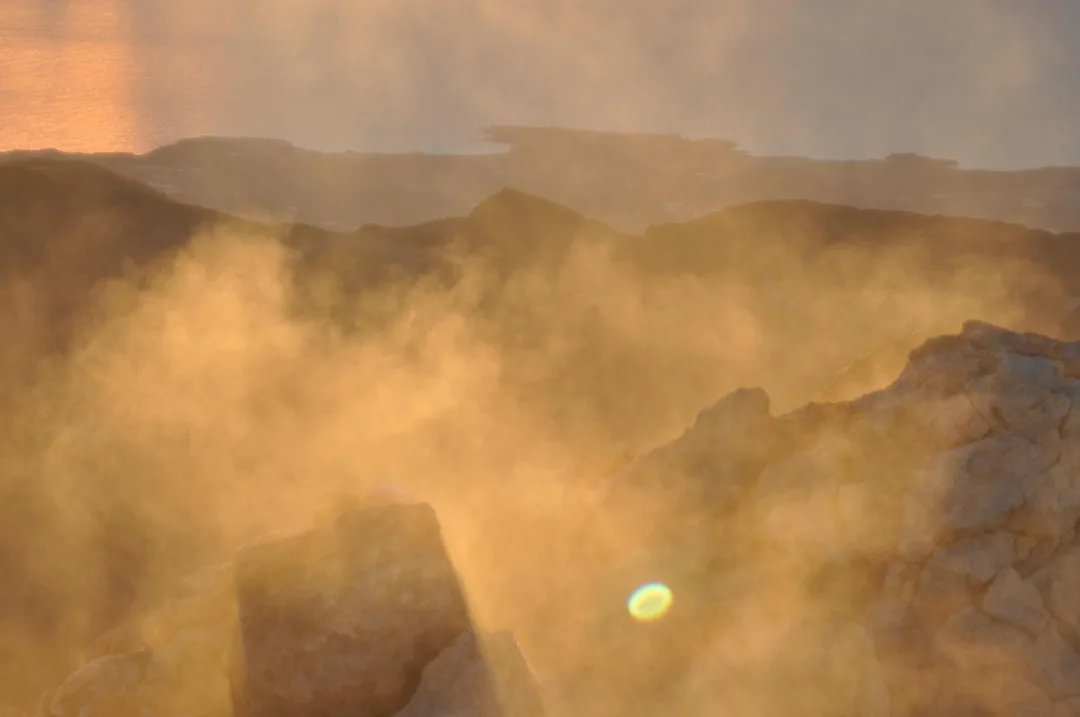
Calima is a weather event where hot, dry air carrying fine dust and sand from the Sahara Desert blows westward across the Atlantic and hits the Canary Islands. When it arrives, the sky turns a hazy yellow-orange, visibility drops, temperatures spike, and the air quality gets worse. The dust isn't just sand. It's a fine aerosol of quartz, clay, and sometimes pollutants from North Africa that can penetrate deep into your lungs.
Most calima episodes last one to three days. Some pass in a few hours. The worst ones can last a week. Weather stations technically register multiple dust events per year, but the strong calimas that actually affect your holiday (hazy skies, poor air quality, serious heat) only happen a couple of times a year at most, and some years barely at all. When they do occur, it's usually between January and April, though summer episodes also happen occasionally. The most recent significant calima hit the Canary Islands on March 30, 2026, with a dust cloud over 1,300 km wide (bigger than the length of the UK). Visibility dropped to around 3,000 metres in parts of Tenerife, and conditions didn't fully clear until April 2.
The most severe calima in recent memory was in February 2020, when all eight Canary Islands airports were shut down simultaneously, over 800 flights per day were affected, visibility dropped below 400 metres, and 120,000 passengers were stranded. Schools and universities closed. Carnival events were cancelled. Wind gusts hit 160 km/h and wildfires broke out on Tenerife and Gran Canaria, forcing the evacuation of 2,000 people. That was an extreme event, though. Most calimas are far milder and more of an inconvenience than a crisis.
How calima affects flights
During moderate to severe calima, flights can be delayed, diverted, or cancelled. Both Tenerife South (TFS) and Tenerife North (TFN) airports are affected, though TFN tends to be hit harder due to its location. When visibility drops below safe thresholds, airport authorities will ground flights until conditions improve.
In the March 2026 episode, flights from Gran Canaria and Tenerife Norte were disrupted, with some UK-bound flights from Birmingham, Manchester, and East Midlands diverted to Fuerteventura. In September 2025, a red alert was issued for Tenerife with temperatures reaching 38°C during a combined heatwave and calima.
If your flight is affected, the airline is responsible for rebooking or refunding under EU passenger rights regulations (EC 261/2004). In practice, this means they should offer alternative flights and, if you're stuck overnight, accommodation and meals. Keep all receipts.
Travel insurance that covers weather-related disruptions is worth having if you're visiting between January and April. Not all standard policies cover calima, so check the wording before you buy. Policies that explicitly include "natural events" or "adverse weather" are what you want.
Health effects and how to stay safe
Calima affects everyone to some degree, but people with asthma, allergies, or other respiratory conditions need to take it seriously. The fine particles (PM10 and smaller) can irritate airways, trigger asthma attacks, and cause coughing, sore throats, and irritated eyes.
During a calima episode, authorities in the Canary Islands typically advise:
- Keep windows and doors closed. Run air conditioning on recirculate mode if you have it.
- Avoid strenuous outdoor exercise, especially between noon and 4pm when dust concentration and heat tend to peak.
- Stay hydrated, more than you think you need to.
- If you have a respiratory condition, keep your inhaler or medication on hand and consider wearing an FFP2 mask outdoors during intense episodes.
Pharmacies across Tenerife stock masks, eye drops, and basic respiratory supplies. If you feel unwell, call 012 (the Canary Islands information line) or 112 for emergencies.
For most healthy adults, a mild calima is an annoyance rather than a health risk. Your throat might feel scratchy, your eyes might itch, and your rental car will need a wash. It's the intense episodes (like February 2020) that require real caution.
What to do during a calima day
Calima days aren't great for the beach. The haze kills the views, the dust gets everywhere, and the heat can be oppressive when combined with the dry Saharan air. But Tenerife has enough indoor options to fill a day:
Visit a museum or gallery. The Museum of Nature and Archaeology (MUNA) in Santa Cruz, the Museum of History and Anthropology (Casa Lercaro) in La Laguna, and the Museum of Science and the Cosmos in La Laguna are all worth your time.
Go shopping. Siam Mall in Costa Adeje is fully enclosed and air-conditioned. Calle del Castillo in Santa Cruz is a long pedestrianised shopping street. Both are good ways to spend a few hours out of the dust.
Book an indoor activity. Siam Park operates during calima (the pools are heated and the water washes the dust off you, which honestly feels great), and Loro Parque has enough indoor exhibits to fill most of a day. The Scandal Dinner Show is a good evening option.
If the calima is mild and the air quality is acceptable, boat trips still run. The sea conditions during calima are often calm (the same weather pattern that brings the dust tends to suppress waves), and being on the water puts some distance between you and the worst of the dust on land. Check with CanaryVIP boat excursions for the day's status.
One thing worth mentioning: calima sunsets can be genuinely spectacular. The dust particles in the atmosphere scatter the light and produce deep reds and oranges that you don't get on clear days. If you're into photography, a calima sunset over La Gomera from the Costa Adeje coast is something you won't forget.
How to prepare before your trip
If you're visiting Tenerife between January and April (peak calima season), a few simple preparations will help:
Pack a light scarf or buff that you can pull over your nose and mouth if the air gets bad. It's less cumbersome than carrying a mask and works fine for mild episodes.
Bring any respiratory medication you use regularly. Don't assume you'll find the exact brand at a Tenerife pharmacy (you probably can, but why risk it).
Download a weather app that shows air quality data. The AEMET app (Spain's national weather service) gives calima forecasts, and calimacanarias.com provides real-time dust maps specifically for the Canary Islands.
Build some flexibility into your itinerary. If you've planned an outdoor day and calima rolls in, having a backup plan (museum, shopping, indoor activity) means the day isn't wasted.
Get travel insurance that covers weather disruptions if your trip falls in peak season. The cost is minimal and the peace of mind is worth it.
The most important thing to remember: calima is a normal part of Tenerife's climate. It happens every year. The island is set up to deal with it. Most episodes are mild and pass quickly. You adapt, you do something indoors for a day, and you get on with your holiday.
Is Tenerife safe for tourists?
Short answer: yes. Tenerife is one of the safest tourist destinations in Europe. The Canary Islands consistently rank among the safest regions in Spain, with serious crime rates well below those of Barcelona, Madrid, or the Balearic Islands. Over 8 million people visited Tenerife in the 2024-2025 period, and the vast majority had completely trouble-free holidays.
Violent crime directed at tourists is extremely rare. There are no poisonous snakes, no dangerous spiders, and shark attacks are essentially non-existent (roughly one incident every 30 years, almost always involving fishermen well offshore).
The main thing to watch for is petty theft: pickpocketing in crowded areas (markets, bus stations, beaches, nightlife strips), bag-snatching on promenades, and theft from unattended belongings on the beach. These are the same risks you'd encounter in any popular European destination. Basic precautions work: keep valuables in front pockets, don't leave bags unattended, use your hotel safe, and be aware of your surroundings in crowded nightlife areas like the Veronicas strip.
Healthcare in Tenerife is good. There are public hospitals and private clinics across the island, and pharmacies are well-stocked and widely available. No special vaccinations are required. EU citizens can use their European Health Insurance Card (EHIC). For everyone else, travel insurance covering medical expenses is recommended.
Natural hazards are minimal. Mount Teide is a dormant volcano that is continuously monitored. There has been no significant volcanic activity on Tenerife in over 100 years (the last eruption was at Chinyero in 1909). Earthquakes occur occasionally but are almost always too minor to feel. The main natural consideration for visitors is the ocean: northern and eastern beaches can have strong currents, so always check beach flags before swimming.
Flight times to Tenerife
Here are approximate direct flight times from major European and international cities:
- London: 4 hours 30 minutes. Multiple airlines operate direct flights to Tenerife South (TFS) daily.
- Manchester / Birmingham: 4 hours 30 to 45 minutes.
- Dublin: Around 4 hours 30 minutes.
- Berlin: Approximately 5 hours.
- Amsterdam: Around 4 hours 30 minutes.
- Paris: 4 hours 10 minutes.
- Madrid: 2 hours 45 minutes (domestic flight).
- Scandinavian cities (Oslo, Stockholm, Copenhagen): 5 to 5 hours 30 minutes.
- New York: Around 8 to 9 hours direct. Most routes from the US include a layover in a European hub (Madrid, Lisbon, London), which extends total travel time to 11 to 14 hours.
Tenerife has two airports. Tenerife South (TFS / Reina Sofia) handles most international charter and holiday flights. Tenerife North (TFN / Los Rodeos) handles mainly domestic and inter-island routes, plus some European flights. If you're staying in the southern resorts (Costa Adeje, Playa de las Americas, Los Cristianos), TFS is the most convenient airport, about 15 to 20 minutes by taxi or bus.
Book activities with CanaryVIP
Whatever the weather, CanaryVIP has options. From boat trips and water sports to theme park tickets, guided tours, and evening shows, every booking comes with our Best Price Guarantee and most activities include hotel pickup.