The post Rent a Vacation Property in Tenerife appeared first on CanaryVIP.com.
]]>
Why rent a vacation property in Tenerife
Tenerife has warm weather year-round. The south of the island averages 20 to 25°C even in winter, with very little rain. The north is greener and a few degrees cooler, but still mild by European standards. This climate means a vacation rental here works in any month, not just summer.
The island also has direct flights from most major European cities (UK, Germany, Scandinavia, Netherlands, Poland, and more), with Tenerife South Airport (TFS) serving the main tourist areas and Tenerife North Airport (TFN) serving Santa Cruz and the north coast.
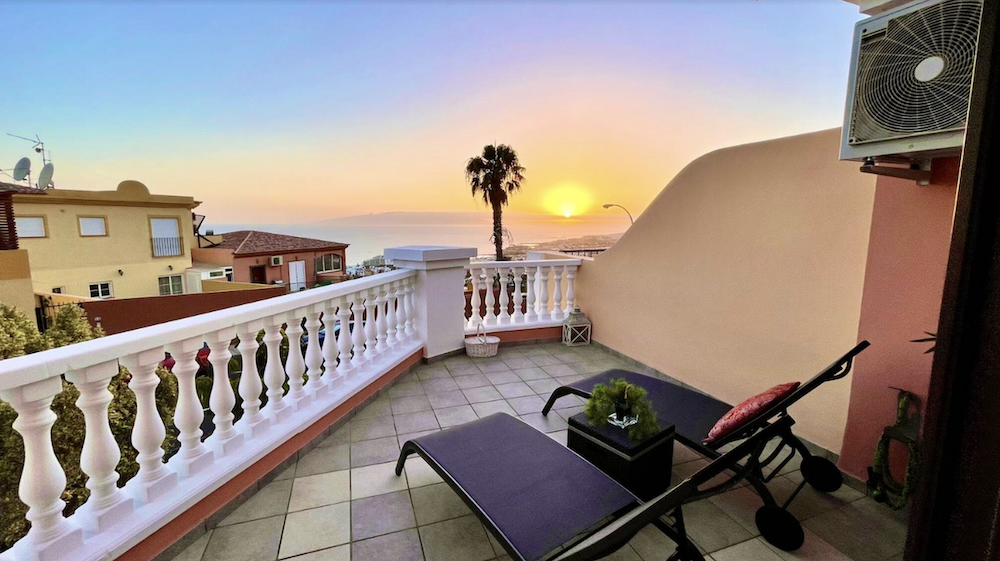
Whether you’re looking for a beachfront apartment in Costa Adeje, a villa with a pool in the hills above the coast, or a quieter rental outside the main resort areas, the options in Tenerife cover a wide range of budgets and styles.
Types of vacation properties in Tenerife
Villas
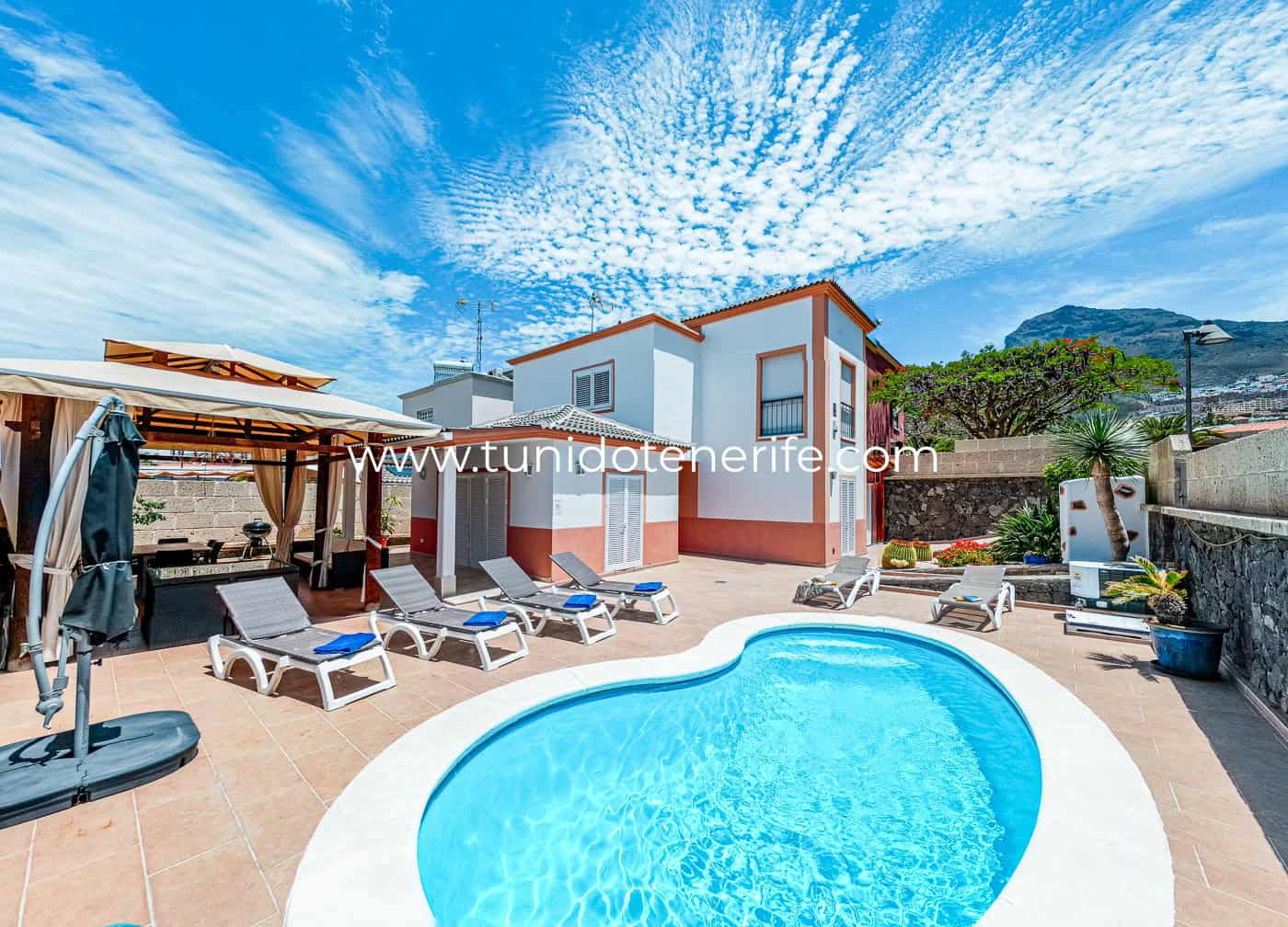
Villas are the best option if you want privacy, space, and your own pool. Most rental villas in the south of Tenerife come with private pools, terraces, sea views, and parking. They work well for families, groups of friends, or couples who want more space than a hotel room.
Popular areas for villas include Costa Adeje (Madroñal de Fañabé, Roque del Conde, Torviscas Alto), the Golf del Sur area, and the west coast near Los Gigantes and Playa San Juan.
Explore available villas for rent in Tenerife.
Apartments
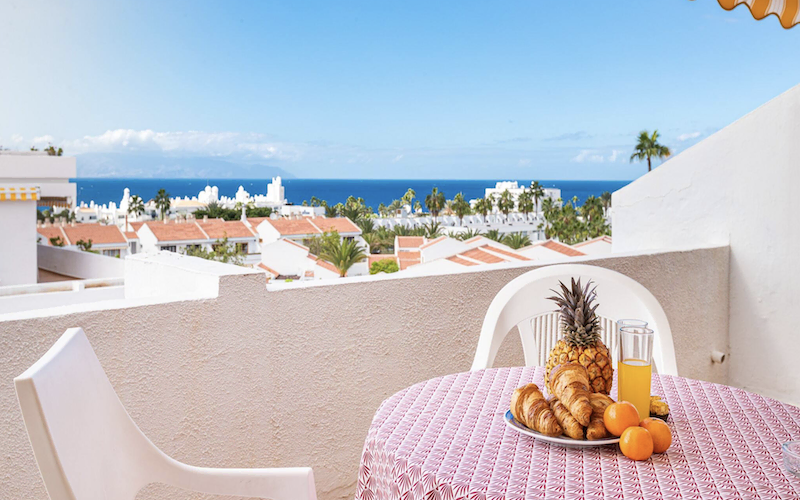
Apartments are the most common type of vacation rental in Tenerife and usually the most affordable. Most are located close to beaches, restaurants, and shops. Many have shared pools, balconies with sea or mountain views, and are walking distance to the main tourist areas.
Good areas for apartment rentals include Playa Fañabé, Los Cristianos, Las Américas, San Eugenio, and El Médano (if you prefer a more local, less touristy atmosphere).
See available apartments for rent in Tenerife.
Houses and duplexes
If you want more space than an apartment but don’t need a full villa, houses and duplexes are a good middle ground. They often come with private gardens, parking, and a more residential feel. Prices are generally lower than villas. Good for longer stays or families who want a home-like setup.
Best areas to rent in Tenerife
Choosing the right area matters as much as choosing the right property. Each part of the island has a different feel:
Costa Adeje
The most popular area for vacation rentals in the south. Costa Adeje has the best beaches (Playa del Duque, Playa de Fañabé), upscale restaurants, shopping (Siam Mall, Plaza del Duque), and the highest concentration of quality rental properties.
Within Costa Adeje, the neighbourhoods vary:
Madroñal de Fañabé. A quiet residential area on the hillside above Fañabé beach. Modern villas with sea views, good access to shopping centres and restaurants. Popular with families.
Playa Fañabé. Right on the beachfront. Apartments and some villas within walking distance of bars, restaurants, and water sports. Livelier atmosphere.
Roque del Conde. An exclusive hillside area with luxury villas and panoramic views of the coast and La Gomera. Quieter and more private than the beachfront areas. You’ll need a car.
Torviscas Alto and San Eugenio Alto. Residential areas above the coast with a mix of apartments and villas. Good value compared to beachfront properties, and still only a short drive to the beaches.
From Costa Adeje you can easily access boat trips departing from Puerto Colón, as well as water sports and theme parks.
Los Cristianos
Once a fishing village, Los Cristianos is now one of Tenerife’s busiest resort towns. It has a long promenade, sandy beaches, a harbour with ferries to La Gomera, and a wide range of restaurants and bars. More affordable than Costa Adeje, with a more traditional feel. Good for budget-conscious travellers and anyone who wants to be in the middle of things.
Playa de las Américas
Playa de las Américas is the nightlife centre of Tenerife’s south coast. Bars, clubs, live music, and beachfront apartments. If you want to be close to the action in the evenings, this is the area. During the day it’s a normal beach resort with good facilities and water sports.
How to choose the right rental
Location. Decide what matters most: being on the beach, having quiet surroundings, or being close to nightlife and restaurants. The south coast (Costa Adeje, Las Américas, Los Cristianos) has the best weather and the most tourist infrastructure. The north (Puerto de la Cruz, La Orotava) is greener, cooler, and less crowded.
Property type. Villas for groups and luxury stays. Apartments for convenience and budget. Houses and duplexes for a home-like feel with more space.
Budget. Prices vary significantly depending on location, season, and property type. Beachfront properties in Costa Adeje cost more than hillside apartments in San Eugenio Alto. High season (Christmas, Easter, July to August) is the most expensive. Shoulder months (May, June, September, October) often offer the best balance of good weather and lower prices.
Amenities. Make a list of what you need before searching: private pool, ocean view, air conditioning, Wi-Fi, parking, washing machine. Not all properties have everything.
Booking method. Booking directly through a trusted local agency can get you better prices than global platforms and more personalised service. Tu Nido Tenerife has over 15 years of experience managing vacation rentals in the south of the island and only lists properties they have personally verified.
Legal requirements: the VV licence
In Tenerife, short-term rental properties must have a Vivienda Vacacional (VV) licence issued by the Canary Islands Government. This licence confirms the property meets safety, quality, and legal standards. Always ask for the VV number before booking. If a property doesn’t have one, it may be operating illegally, which could cause problems for you as a guest.
Reputable agencies like Tu Nido Tenerife only list licensed properties.
Be cautious with listings on social media or unofficial websites that don’t show a licence number. If the price seems too good to be true, it probably is. Agencies with a physical presence on the island are a safer bet than anonymous online listings.
Most residential areas in Tenerife also have community rules about noise (especially after 10pm), parking, and pool use. Respecting these keeps you on good terms with neighbours and avoids fines.
Why book with a local agency

Platforms like Airbnb and Booking.com are convenient, but booking through a local agency has some real advantages:
Verified properties. Local agencies visit and inspect their listings. Tu Nido Tenerife only rents properties they know and trust, so you don’t arrive to find a property that looks nothing like the photos.
Local knowledge. A local agent can recommend the best neighbourhood for your needs, suggest restaurants, and help with practical questions about the area. Booking through Tu Nido Tenerife also gives you access to discounts on boat trips and private yacht charters through CanaryVIP.
Direct communication. Unlike big platforms, you’re dealing with a small team who can arrange early check-ins, baby cots, airport transfers, or anything else you need. No chatbots, no call centres.
Support if something goes wrong. A broken appliance, a lost key, a question about the area. Having a local team nearby who can solve problems quickly is worth a lot, especially when you’re on holiday.
Often cheaper. Booking directly with Tu Nido Tenerife can be cheaper than booking the same property through Airbnb or Booking.com, because there are no platform fees.
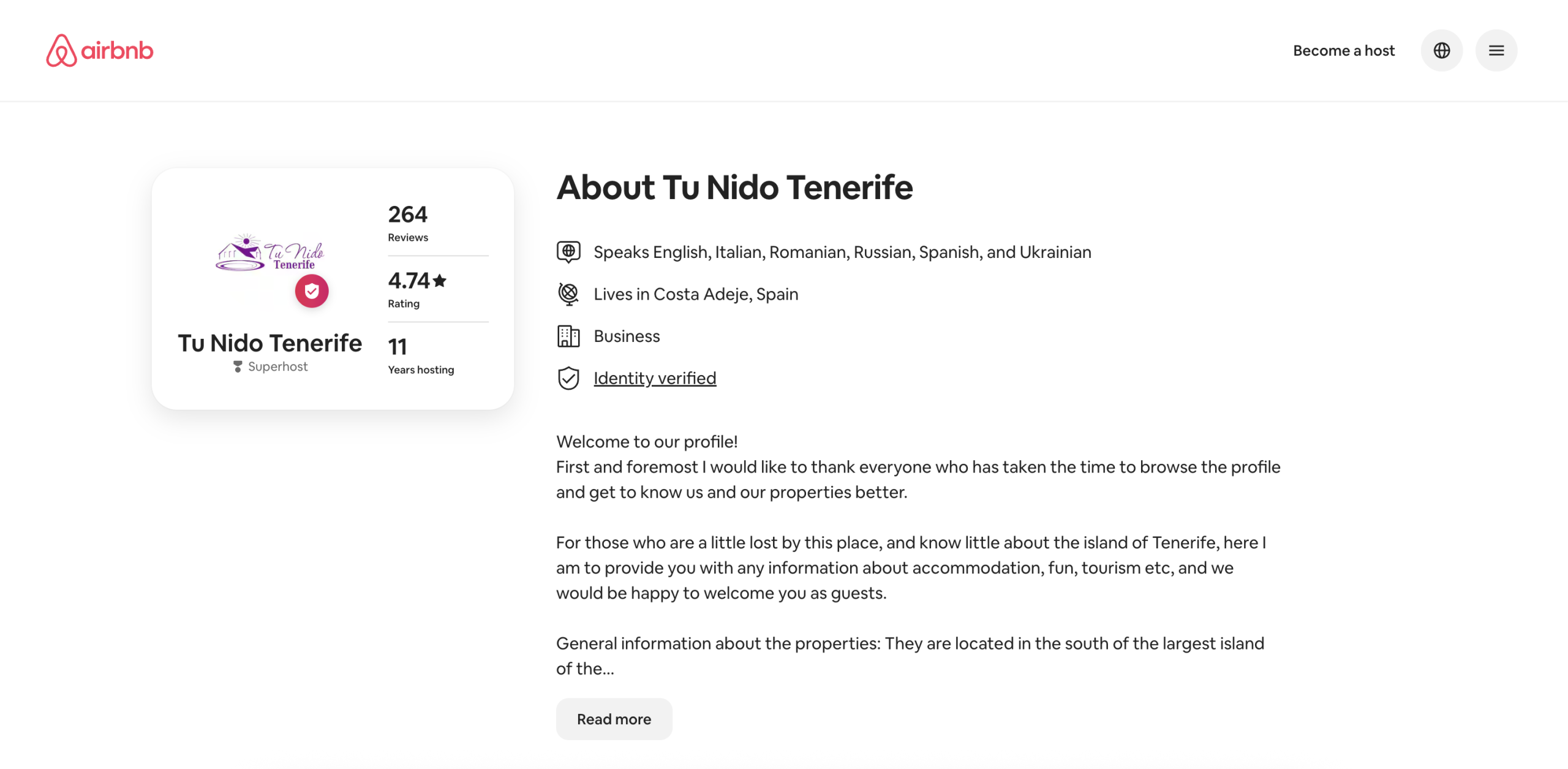
Tu Nido Tenerife is a Superhost on Airbnb and holds an average rating of 4.7 out of 5 stars on Booking.com.
Things to do during your stay
One of the main advantages of a vacation rental over a hotel is the freedom to explore the island at your own pace. Here are some of the best experiences available through CanaryVIP:
Whale and dolphin watching. The waters off south Tenerife are home to around 500 resident pilot whales. Boat excursions depart daily from Puerto Colón and Los Cristianos.
Private yacht charters. Rent a private yacht for your group and sail along the coast with food, drinks, and water sports included.
Water sports. Jet ski tours, kayaking with sea turtles, scuba diving, parasailing, and paddleboarding. All available year-round on the south coast.
Theme parks. Siam Park (water park, heated to 24°C) and Loro Parque (zoo and marine park in Puerto de la Cruz).
Guided tours. Teide National Park, north Tenerife (La Laguna, Anaga, Garachico), jeep tours to Masca and the Teno mountains.
Adventure activities. Quad safaris, buggy tours, horse riding, and paragliding.
Checklist before booking
Location confirmed. Make sure the property is in the area that matches your plans: beach, nightlife, nature, or quiet residential.
Property type decided. Villa, apartment, or house, based on your group size and budget.
VV licence checked. Ask for the Vivienda Vacacional licence number. No licence, don’t book.
Amenities confirmed. Check for your must-haves: Wi-Fi, air conditioning, pool, parking, sea view, washing machine.
Reviews read. Check what previous guests say. Tu Nido Tenerife has hundreds of reviews averaging 4.7 out of 5 stars.
Booked directly. Book through a trusted local agency like Tu Nido Tenerife for better rates and personal service.
Activities planned. Book popular excursions like whale watching and private yacht charters in advance, especially during high season.
The post Rent a Vacation Property in Tenerife appeared first on CanaryVIP.com.
]]>The post Driving in Tenerife: do you need a car, and what to know if you rent one appeared first on CanaryVIP.com.
]]>
A practical guide to getting around Tenerife by car
One of the first questions people ask when planning a trip to Tenerife is whether they need a rental car. The short answer: it depends on what kind of holiday you want.
If you’re staying in the south (Costa Adeje, Playa de las Américas, Los Cristianos) and your plan is mainly beaches, restaurants, and organised excursions, you can manage perfectly well without a car. The resort areas are walkable, the bus network covers the main routes, and most excursions and activities include hotel pickup.
If you want to explore the island properly (the north coast, mountain villages, hidden beaches, wine country, the Anaga forest), a rental car makes a big difference. Public transport reaches most towns but not on your schedule, and the more scenic and remote spots are either poorly served or not served at all by bus.
What driving in Tenerife is actually like

The road network is good. The two main motorways, the TF-1 (south coast) and the TF-5 (north coast), connect all the major towns and are fast, well-maintained dual carriageways. You can drive from Costa Adeje to Santa Cruz in under an hour.
The mountain roads are a different story. Routes like the TF-436 to Masca, the road up to Teide through Vilaflor, or the winding roads through Anaga are narrow, steep, and full of hairpin bends. They’re well surfaced but demanding if you’re not used to mountain driving. Take your time, use your horn on blind corners, and pull over to let faster traffic pass.
Driving is on the right (same as mainland Spain). Speed limits are clearly signposted: 120 km/h on motorways, 50 km/h in towns. Roundabouts are common. Fuel stations are easy to find on the main roads but sparse in rural mountain areas, so fill up before heading into the interior.
Parking in the resort areas can be tight, especially in Los Cristianos and Las Américas. Most shopping centres have free parking (Siam Mall has 1,100 spaces). Street parking in Santa Cruz and La Laguna uses the blue zone pay-and-display system. In smaller towns and villages parking is usually free and easy.
Practical tips for renting a car in Tenerife

Book in advance. Prices are lower and availability is better, especially during high season (Christmas, Easter, July to August). Last-minute airport rentals cost significantly more.
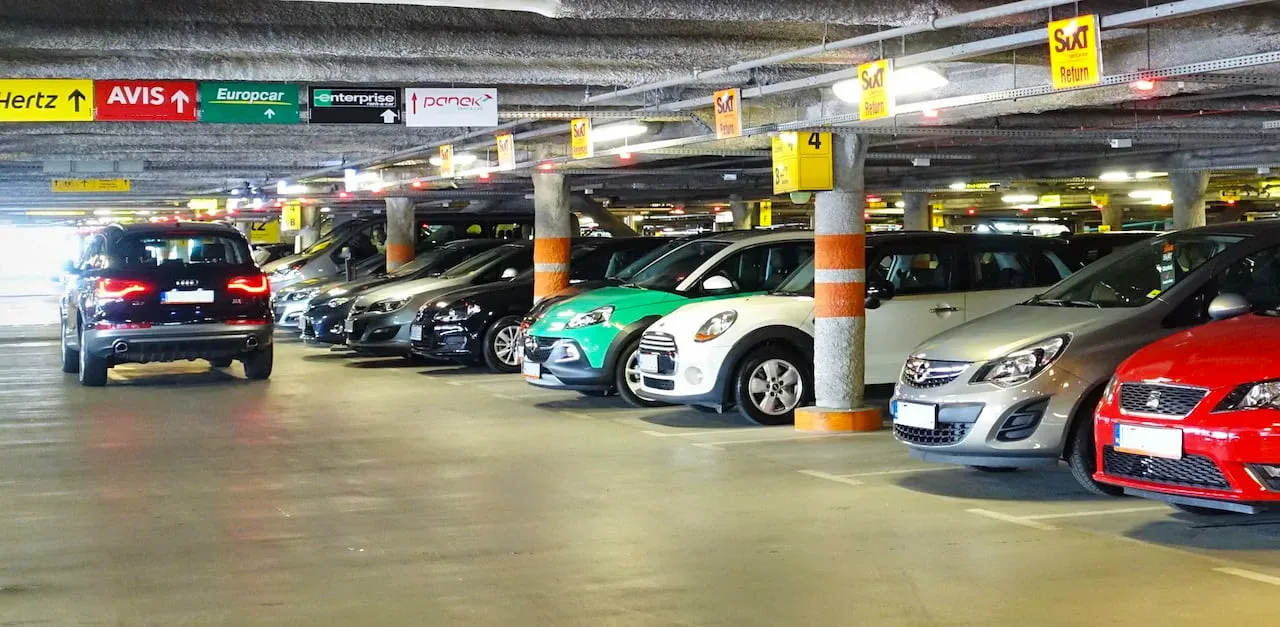
Consider local companies. International chains (Hertz, Europcar, Avis) are at both airports, but local companies like CICAR and Autoreisen are often cheaper and have good reputations on the island. Compare prices online before arriving.
Pick up at the airport if you can. Tenerife South Airport (TFS) has all the major rental desks. Picking up and dropping off at the airport avoids extra delivery charges. If you’re only renting for a few days mid-trip, many companies also have offices in the resort areas.
Check the insurance carefully. Basic rental usually includes third-party liability but not full collision damage. The excess on a standard rental can be €800 to €1,500. You can buy excess reduction from the rental company (often overpriced) or take out an independent policy before your trip (usually much cheaper). Read the terms before you sign.
Inspect the car before driving off. Walk around the car with the rental agent, photograph any existing damage, and make sure it’s noted on the contract. This protects you from being charged for scratches that were already there.
Fuel policy. Most reputable companies use a full-to-full policy: you get the car with a full tank and return it full. Avoid companies that charge you for a full tank upfront, as you’ll rarely get a refund for unused fuel.
A small car is usually enough. Unless you’re travelling with a lot of luggage or need space for car seats, a compact car (Fiat 500, VW Polo, or similar) handles the narrow mountain roads better than a larger vehicle and is much easier to park.
GPS or phone navigation. Google Maps works well in Tenerife and is usually more up to date than rental car GPS units. Download the offline map of Tenerife before your trip in case of patchy signal in the mountains.
Places worth driving to
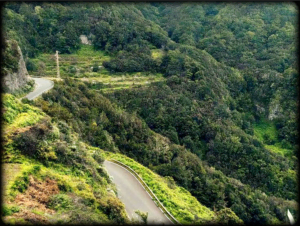
These are the spots that really benefit from having your own car:
Masca. A tiny mountain village in the Teno massif, reached via the TF-436, one of the most scenic (and hair-raising) roads on the island. The drive from Santiago del Teide down to Masca takes about 20 minutes but feels much longer because of the views and the bends. Go early in the morning before the tour buses arrive.
Anaga Rural Park. The northeast corner of the island, covered in ancient laurel forest. Narrow roads wind through cloud forest with views down to remote beaches like Playa de Benijo and Playa de las Teresitas. Best combined with a stop in La Laguna on the way back.
Teide National Park. You can reach Teide by bus (Route 343 from the south), but having a car lets you stop at viewpoints along the way, visit at sunrise or sunset, and take the scenic route through Vilaflor or Chío rather than just the motorway.
The west coast. Los Gigantes, Playa de la Arena, and Playa San Juan are all reachable by bus but much easier to explore by car. The coast road between Los Gigantes and Buenavista del Norte is one of the most scenic drives on the island.
The Orotava Valley and wine country. La Orotava, the Tacoronte-Acentejo wine region, and the rural villages above Puerto de la Cruz are best explored by car. Stop at a guachinche (family-run eatery serving house wine and home cooking) for lunch.
If you don’t want to rent a car
You can still see most of these places without driving yourself:
Guided bus tours cover Teide, the north coast (La Laguna, Anaga, Icod de los Vinos, Garachico), and the west coast. Hotel pickup included.
Jeep tours go to Masca, the Teno mountains, and other off-the-beaten-track spots that would require confident mountain driving to reach on your own.
The Teide Quad Safari and buggy tours take you through the volcanic landscapes above the coast.
For the south coast, boat trips, water sports, and theme park visits all include hotel pickup, so you don’t need a car at all.
Browse the full range of Tenerife excursions and activities at CanaryVIP. Every booking comes with our Best Price Guarantee.
The post Driving in Tenerife: do you need a car, and what to know if you rent one appeared first on CanaryVIP.com.
]]>The post 6 Top Clubs in Tenerife for Unforgettable Nights appeared first on CanaryVIP.com.
]]>Tenerife has the liveliest nightlife in the Canary Islands. The south of the island, particularly the strip running from Costa Adeje through Playa de las Américas to Los Cristianos, is where most of the action is concentrated. Whether you’re after beachfront cocktails at sunset, a proper nightclub that goes until 6am, or a more relaxed bar with live music, the south coast delivers.
The nightlife scene here caters to a genuinely international crowd. On any given night you’ll hear music ranging from house and techno to reggaeton, R&B, and cheesy pop classics. The vibe varies hugely depending on where you go, so this guide breaks down the main venues and areas to help you find your spot.
Papagayo Beach Club
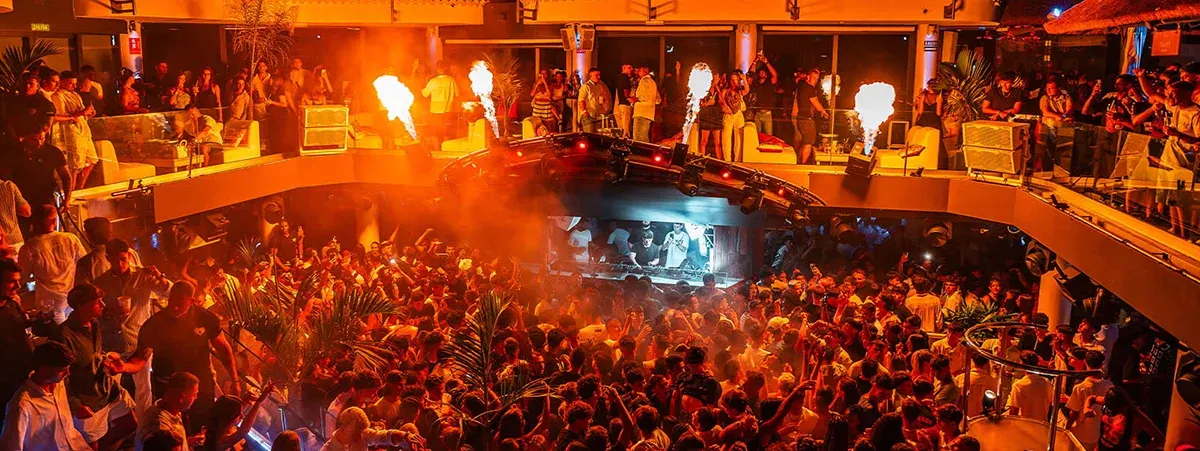 Papagayo is arguably Tenerife’s most iconic nightlife venue. Located right on the beachfront in Playa de las Américas (Av. Rafael Puig Lluvina), it operates as a daytime beach club, restaurant, and evening/night club all in one.
During the day it’s a stylish spot for brunch, lunch, or cocktails with ocean views. As the sun drops, the atmosphere shifts: DJs take over, the lighting changes, and Papagayo transforms into an open-air club that runs into the early hours. The music leans towards house, electronic, and Latin genres, with regular themed nights and guest DJs.
The restaurant side is genuinely good, not just “club food.” They serve a full menu of seafood, international dishes, and cocktails. Many people start the evening with dinner here before the place switches to full club mode.
Papagayo is open from Wednesday to Sunday, typically from 10am through to 3 or 4am depending on the night. It closed briefly for renovations in early 2026 but reopened in mid-March with updated interiors. It’s run by Sound Republic, the same group behind several Tenerife nightlife brands. During peak season, it gets very crowded, so arriving early (especially if you want a good spot at sunset) is smart.
Monkey Beach Club
Monkey Beach Club sits directly on Playa de Troya beach in Costa Adeje, with views across to La Gomera. It’s one of those places that works at any time of day: morning coffee, afternoon sunbed with cocktails, sunset drinks, and then a proper party as night falls.
The atmosphere is relaxed and social. During the day there are loungers, food service, and chill music. By evening, DJs pick up the tempo and the place fills up with a mix of tourists and locals. The music is eclectic, covering everything from commercial hits to deeper electronic sets depending on the night and the DJ.
Monkey Beach Club also serves food (burgers, salads, sharing plates) and has an extensive cocktail menu. The location is hard to beat: you’re literally on the sand with the ocean in front of you.
If you visit during peak season or on weekends, it gets busy fast. Weekday visits tend to be more relaxed and you’ll get better service at the bar. It’s open daily and is one of the more accessible venues for people who want a fun night out without the intensity of a full nightclub.
Tramps
If you want a proper nightclub experience, Tramps is the one. Located on the Veronicas strip in Playa de las Américas (Centro Comercial Starco), Tramps has been a fixture of Tenerife nightlife for years and consistently gets some of the best reviews of any club on the island.
What makes Tramps work is the multiple rooms playing different genres. The main room runs house and dance music. Other areas play R&B, hip-hop, reggaeton, and pop/karaoke. There’s also an open-air terrace and VIP lounges with bottle service. This setup means you can switch between vibes without leaving the venue.
The club has a 1,500-person capacity and fills up quickly in summer, so buying tickets in advance during peak season is recommended. It’s open seven days a week and stays open until 6am, making it the go-to destination when everywhere else closes. Things tend to get going after midnight, and the peak hours are typically 2am to 5am.
One practical note: Tramps is in the Veronicas area, which is the most concentrated nightlife strip on the island. It’s loud, busy, and very much a party zone. If you’re looking for something more refined, look at the beach clubs instead. If you want to dance until sunrise, this is the place.
Magic Lounge Club

Magic Lounge Club (often just called “Magic”) is the go-to for anyone into electronic music. It’s a smaller, more intimate venue in Playa de las Américas that focuses on house, techno, and deeper electronic genres rather than commercial hits.
The sound system is excellent for a venue its size, and the club regularly brings in quality DJs. The crowd tends to be slightly older and more music-focused than the big commercial clubs. If you appreciate good electronic music and don’t need a massive dance floor or VIP tables, Magic is where you’ll have the best night.
The atmosphere is dark, club-focused, and stripped back. It’s not about bottle service or Instagram photos; it’s about the music. Think more Berlin than Ibiza. Drinks are available but the cocktail menu is simpler than the beach clubs.
Magic works best as a late-night destination. Go to one of the beach clubs or bars first, then head to Magic after midnight when the DJs really get going.
Achaman Discopub
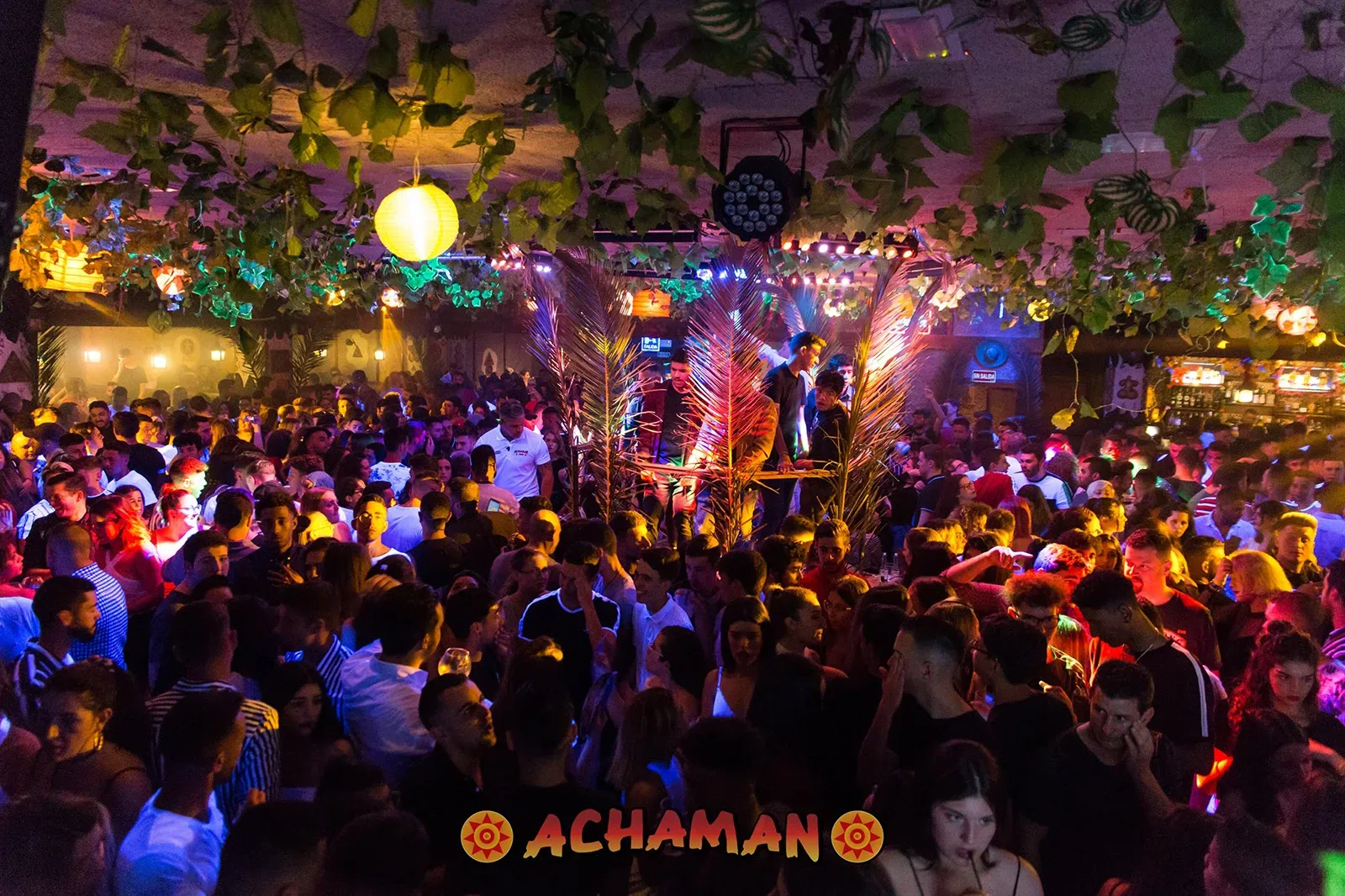 The music is a mix of Spanish pop, reggaeton, Latin hits, and international dance music. The space is cosy rather than cavernous, which creates a friendly, inclusive vibe. It’s the kind of place where you end up talking to strangers and staying longer than planned.
Achaman is centrally located and easy to get to, making it a good option for a night out that feels more authentic and less resort-oriented. It regularly hosts themed nights and special events. If you want to experience nightlife the way locals do it (rather than the tourist version), this is a solid choice.
The Veronicas Strip: What to Know
The Veronicas strip in Playa de las Américas is the epicentre of Tenerife nightlife. This 300-metre stretch is packed with bars, clubs, and late-night spots including Tramps, Rags, Linekers, and dozens of smaller bars. It’s loud, busy, and unapologetically a party zone.
Most bars here use promoters who stand outside offering drink deals and free shots to entice you in. The deals can be good but compare a few before committing. Drinks in the Veronicas bars tend to be cheaper than at the beach clubs, though quality varies.
The strip comes alive from about 10pm and peaks between 1am and 4am. It’s popular with younger British and Irish tourists, stag and hen groups, and anyone looking for a high-energy night out. It’s not for everyone, but if you’re in the mood, it’s a lot of fun.
A few practical tips: keep your belongings secure (pickpocketing can happen in crowded venues), drink water between alcoholic drinks (the Tenerife heat plus alcohol is a strong combination), and arrange your transport home in advance. Taxis from the Veronicas area get scarce and expensive after 3am.
Beyond the Clubs: Other Evening Options
Not everyone wants a 4am finish. Tenerife also has plenty of evening entertainment that doesn’t involve a nightclub:
The Scandal Dinner Show in Costa Adeje combines a meal with live cabaret, drag, and variety performances. It’s one of the most popular evening shows on the island and a great option for couples or groups.
Sunset boat trips are another way to spend an evening. Several CanaryVIP boat excursions offer late afternoon departures that include drinks and food while cruising the coast as the sun goes down. Private charters via CanaryVIP boat hire can be tailored to your schedule.
For a quieter evening, the Los Cristianos harbour area has a strip of restaurants and bars overlooking the water. It’s more relaxed than Playa de las Américas and better suited to couples or families looking for a pleasant evening out.
In Costa Adeje, the area around Playa del Duque and the Siam Mall zone has upscale restaurants and cocktail bars that offer a more refined experience. Several hotel bars (particularly at the five-star resorts) have excellent sunset terraces.
And for something completely different, the Teide stargazing experience takes you up the mountain at night for some of the clearest skies in the world. Not nightlife in the traditional sense, but one of the most memorable evenings you can have on the island.
Book Evening Activities with CanaryVIP
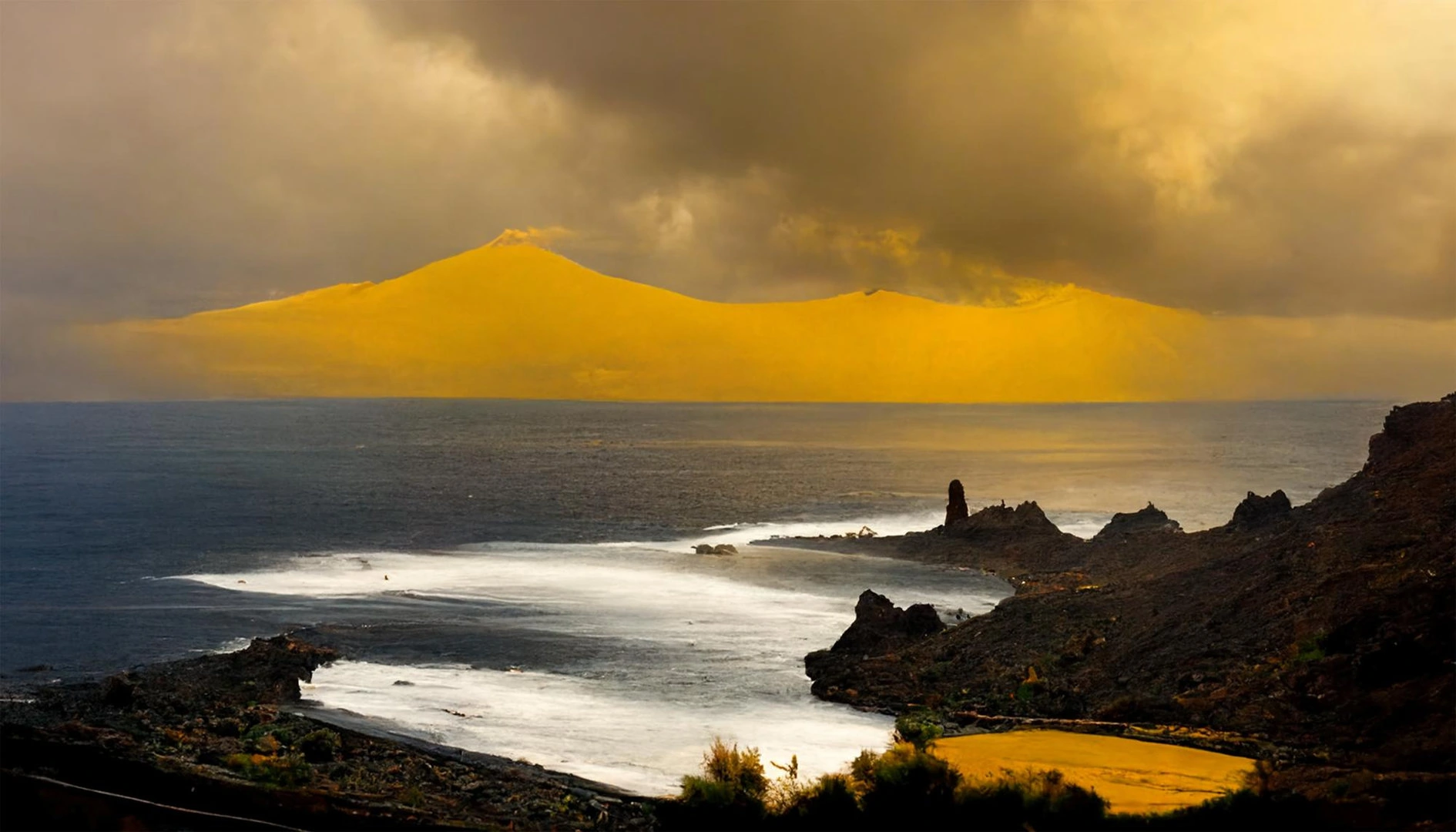
Looking for something to do before (or instead of) the clubs? CanaryVIP offers evening shows, sunset boat trips, private boat charters, and Teide stargazing tours. Every booking includes our Best Price Guarantee and most activities include hotel pickup.
Browse all Tenerife activities and excursions here
The post 6 Top Clubs in Tenerife for Unforgettable Nights appeared first on CanaryVIP.com.
]]>The post Calima in Tenerife: what it is, how it affects your holiday, and what to do (Updated April 2026) appeared first on CanaryVIP.com.
]]>
What is calima and how often does it actually happen?
If you’ve spent any time researching a trip to Tenerife, you’ve probably come across the word “calima.” It’s one of those things that sounds dramatic but is actually quite straightforward once you understand it. Here’s what you need to know.
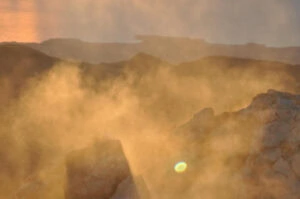
Calima is a weather event where hot, dry air carrying fine dust and sand from the Sahara Desert blows westward across the Atlantic and hits the Canary Islands. When it arrives, the sky turns a hazy yellow-orange, visibility drops, temperatures spike, and the air quality gets worse. The dust isn’t just sand. It’s a fine aerosol of quartz, clay, and sometimes pollutants from North Africa that can penetrate deep into your lungs.
Most calima episodes last one to three days. Some pass in a few hours. The worst ones can last a week. Weather stations technically register multiple dust events per year, but the strong calimas that actually affect your holiday (hazy skies, poor air quality, serious heat) only happen a couple of times a year at most, and some years barely at all. When they do occur, it’s usually between January and April, though summer episodes also happen occasionally. The most recent significant calima hit the Canary Islands on March 30, 2026, with a dust cloud over 1,300 km wide (bigger than the length of the UK). Visibility dropped to around 3,000 metres in parts of Tenerife, and conditions didn’t fully clear until April 2.
The most severe calima in recent memory was in February 2020, when all eight Canary Islands airports were shut down simultaneously, over 800 flights per day were affected, visibility dropped below 400 metres, and 120,000 passengers were stranded. Schools and universities closed. Carnival events were cancelled. Wind gusts hit 160 km/h and wildfires broke out on Tenerife and Gran Canaria, forcing the evacuation of 2,000 people. That was an extreme event, though. Most calimas are far milder and more of an inconvenience than a crisis.
How calima affects flights
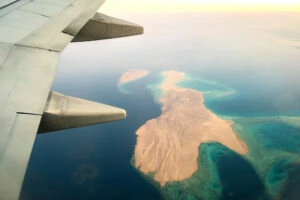
During moderate to severe calima, flights can be delayed, diverted, or cancelled. Both Tenerife South (TFS) and Tenerife North (TFN) airports are affected, though TFN tends to be hit harder due to its location. When visibility drops below safe thresholds, airport authorities will ground flights until conditions improve.
In the March 2026 episode, flights from Gran Canaria and Tenerife Norte were disrupted, with some UK-bound flights from Birmingham, Manchester, and East Midlands diverted to Fuerteventura. In September 2025, a red alert was issued for Tenerife with temperatures reaching 38°C during a combined heatwave and calima.
If your flight is affected, the airline is responsible for rebooking or refunding under EU passenger rights regulations (EC 261/2004). In practice, this means they should offer alternative flights and, if you’re stuck overnight, accommodation and meals. Keep all receipts.
Travel insurance that covers weather-related disruptions is worth having if you’re visiting between January and April. Not all standard policies cover calima, so check the wording before you buy. Policies that explicitly include “natural events” or “adverse weather” are what you want.
Health effects and how to stay safe
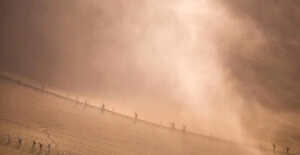
Calima affects everyone to some degree, but people with asthma, allergies, or other respiratory conditions need to take it seriously. The fine particles (PM10 and smaller) can irritate airways, trigger asthma attacks, and cause coughing, sore throats, and irritated eyes.
During a calima episode, authorities in the Canary Islands typically advise:
Keep windows and doors closed. Run air conditioning on recirculate mode if you have it. Avoid strenuous outdoor exercise, especially between noon and 4pm when dust concentration and heat tend to peak. Stay hydrated, more than you think you need to. If you have a respiratory condition, keep your inhaler or medication on hand and consider wearing an FFP2 mask outdoors during intense episodes.
Pharmacies across Tenerife stock masks, eye drops, and basic respiratory supplies. If you feel unwell, call 012 (the Canary Islands information line) or 112 for emergencies.
For most healthy adults, a mild calima is an annoyance rather than a health risk. Your throat might feel scratchy, your eyes might itch, and your rental car will need a wash. It’s the intense episodes (like February 2020) that require real caution.
What to do during a calima day
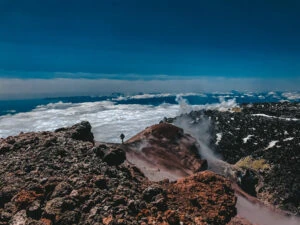
Calima days aren’t great for the beach. The haze kills the views, the dust gets everywhere, and the heat can be oppressive when combined with the dry Saharan air. But Tenerife has enough indoor options to fill a day:
Visit a museum or gallery. The Museum of Nature and Archaeology (MUNA) in Santa Cruz, the Museum of History and Anthropology (Casa Lercaro) in La Laguna, and the Museum of Science and the Cosmos in La Laguna are all worth your time.
Go shopping. Siam Mall in Costa Adeje is fully enclosed and air-conditioned. Calle del Castillo in Santa Cruz is a long pedestrianised shopping street. Both are good ways to spend a few hours out of the dust.
Book an indoor activity. Siam Park operates during calima (the pools are heated and the water washes the dust off you, which honestly feels great), and Loro Parque has enough indoor exhibits to fill most of a day. The Scandal Dinner Show is a good evening option.
If the calima is mild and the air quality is acceptable, boat trips still run. The sea conditions during calima are often calm (the same weather pattern that brings the dust tends to suppress waves), and being on the water puts some distance between you and the worst of the dust on land. Check with CanaryVIP boat excursions for the day’s status.
One thing worth mentioning: calima sunsets can be genuinely spectacular. The dust particles in the atmosphere scatter the light and produce deep reds and oranges that you don’t get on clear days. If you’re into photography, a calima sunset over La Gomera from the Costa Adeje coast is something you won’t forget.
How to prepare before your trip

If you’re visiting Tenerife between January and April (peak calima season), a few simple preparations will help:
Pack a light scarf or buff that you can pull over your nose and mouth if the air gets bad. It’s less cumbersome than carrying a mask and works fine for mild episodes.
Bring any respiratory medication you use regularly. Don’t assume you’ll find the exact brand at a Tenerife pharmacy (you probably can, but why risk it).
Download a weather app that shows air quality data. The AEMET app (Spain’s national weather service) gives calima forecasts, and calimacanarias.com provides real-time dust maps specifically for the Canary Islands.
Build some flexibility into your itinerary. If you’ve planned an outdoor day and calima rolls in, having a backup plan (museum, shopping, indoor activity) means the day isn’t wasted.
Get travel insurance that covers weather disruptions if your trip falls in peak season. The cost is minimal and the peace of mind is worth it.
The most important thing to remember: calima is a normal part of Tenerife’s climate. It happens every year. The island is set up to deal with it. Most episodes are mild and pass quickly. You adapt, you do something indoors for a day, and you get on with your holiday.
Is Tenerife safe for tourists?
Short answer: yes. Tenerife is one of the safest tourist destinations in Europe. The Canary Islands consistently rank among the safest regions in Spain, with serious crime rates well below those of Barcelona, Madrid, or the Balearic Islands. Over 8 million people visited Tenerife in the 2024-2025 period, and the vast majority had completely trouble-free holidays.
Violent crime directed at tourists is extremely rare. There are no poisonous snakes, no dangerous spiders, and shark attacks are essentially non-existent (roughly one incident every 30 years, almost always involving fishermen well offshore).
The main thing to watch for is petty theft: pickpocketing in crowded areas (markets, bus stations, beaches, nightlife strips), bag-snatching on promenades, and theft from unattended belongings on the beach. These are the same risks you’d encounter in any popular European destination. Basic precautions work: keep valuables in front pockets, don’t leave bags unattended, use your hotel safe, and be aware of your surroundings in crowded nightlife areas like the Veronicas strip.
Healthcare in Tenerife is good. There are public hospitals and private clinics across the island, and pharmacies are well-stocked and widely available. No special vaccinations are required. EU citizens can use their European Health Insurance Card (EHIC). For everyone else, travel insurance covering medical expenses is recommended.
Natural hazards are minimal. Mount Teide is a dormant volcano that is continuously monitored. There has been no significant volcanic activity on Tenerife in over 100 years (the last eruption was at Chinyero in 1909). Earthquakes occur occasionally but are almost always too minor to feel. The main natural consideration for visitors is the ocean: northern and eastern beaches can have strong currents, so always check beach flags before swimming.
Flight times to Tenerife
Here are approximate direct flight times from major European and international cities:
London: 4 hours 30 minutes. Multiple airlines operate direct flights to Tenerife South (TFS) daily.
Manchester / Birmingham: 4 hours 30 to 45 minutes.
Dublin: Around 4 hours 30 minutes.
Berlin: Approximately 5 hours.
Amsterdam: Around 4 hours 30 minutes.
Paris: 4 hours 10 minutes.
Madrid: 2 hours 45 minutes (domestic flight).
Scandinavian cities (Oslo, Stockholm, Copenhagen): 5 to 5 hours 30 minutes.
New York: Around 8 to 9 hours direct. Most routes from the US include a layover in a European hub (Madrid, Lisbon, London), which extends total travel time to 11 to 14 hours.
Tenerife has two airports. Tenerife South (TFS / Reina Sofia) handles most international charter and holiday flights. Tenerife North (TFN / Los Rodeos) handles mainly domestic and inter-island routes, plus some European flights. If you’re staying in the southern resorts (Costa Adeje, Playa de las Americas, Los Cristianos), TFS is the most convenient airport, about 15 to 20 minutes by taxi or bus.
Book activities with CanaryVIP
Whatever the weather, CanaryVIP has options. From boat trips and water sports to theme park tickets, guided tours, and evening shows, every booking comes with our Best Price Guarantee and most activities include hotel pickup.
Browse all Tenerife excursions and activities here
The post Calima in Tenerife: what it is, how it affects your holiday, and what to do (Updated April 2026) appeared first on CanaryVIP.com.
]]>The post Jet ski tours in Tenerife: routes, prices, and what to expect (Updated April 2026) appeared first on CanaryVIP.com.
]]>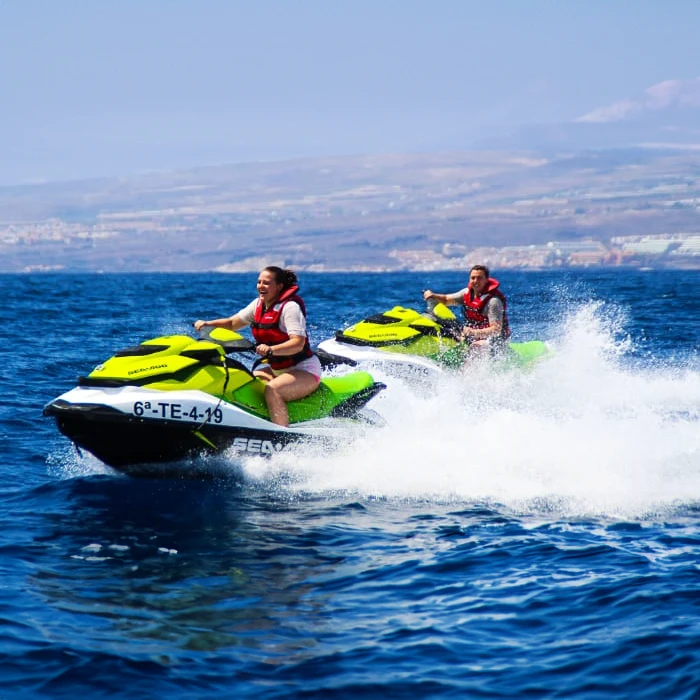
Jet skiing is one of the most popular water sports in south Tenerife. The sheltered coastline between Costa Adeje and Los Cristianos has calm sea conditions for most of the year, which makes it a reliable spot for getting out on the water. You don’t need any previous experience. The jet skis are easy to handle and every tour starts with a safety briefing.
CanaryVIP offers several jet ski options, from a quick 20-minute circuit to a full 2.5-hour coastal safari that reaches the cliffs of Los Gigantes. All jet skis are late-model Kawasaki and Yamaha machines. Here’s a breakdown of what’s available.
Jet ski safari tours (1h, 2h, and 3h)
The guided safari tours depart from Costa Adeje and follow the coastline south and west. You ride in a group led by an instructor, with stops along the way.
The 1-hour tour stays along the Costa Adeje shoreline. It’s a good introduction if you’ve never been on a jet ski before or if you’re short on time. You get up to speed quickly after the briefing and spend most of the hour riding.
The 2-hour tour covers around 60 kilometres of coastline and goes further along the coast. This is where you start to see more open water and have a better chance of spotting dolphins. The longer ride gives you time to get comfortable on the jet ski and enjoy the scenery rather than just the speed.
The 3-hour Los Gigantes safari is the longest option. It follows the coast all the way to the Los Gigantes cliffs on the west side of the island. Seeing those cliffs from sea level on a jet ski is a different experience to seeing them from a boat or from land. The return journey covers the same coastline in reverse, and the whole trip feels more like an expedition than a quick ride.
All safari tours include life jackets. Wetsuits are available if you want them. The instructor leads the group and sets the pace, but there’s room to open up the throttle on straighter sections.
Prices start from €85. Hotel pickup from Costa Adeje, Playa de las Américas, and Los Cristianos is included on most tours.
Jet ski circuit (20 minutes)
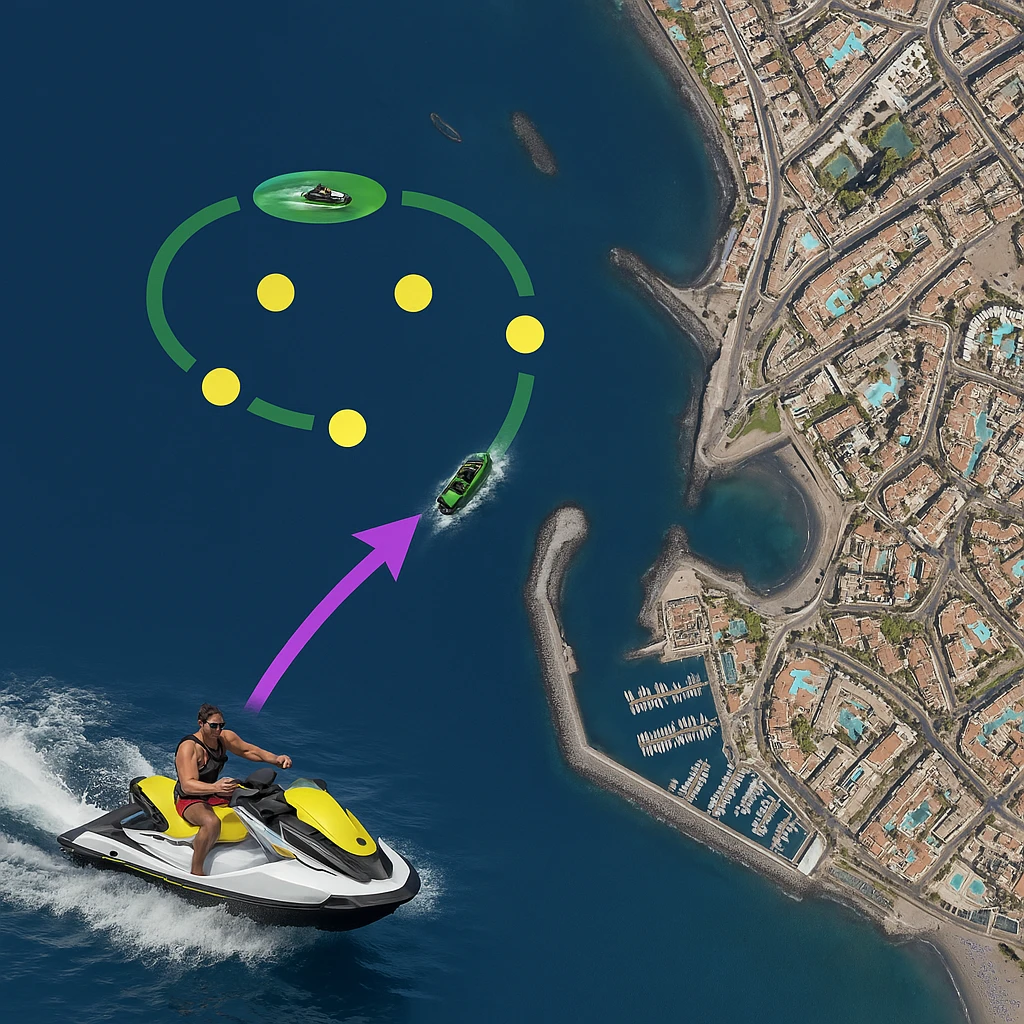
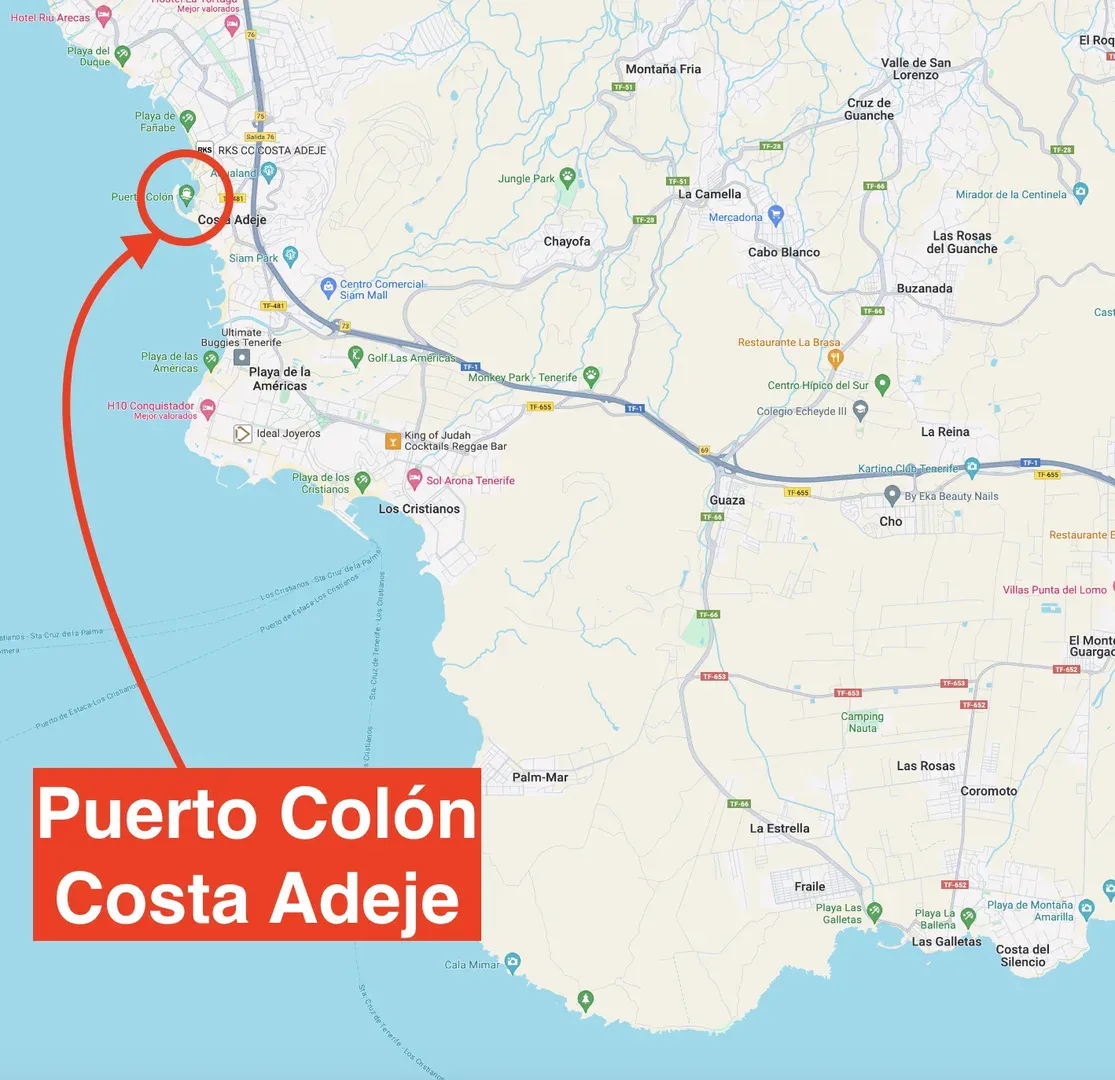
If you just want speed without a guided tour, the jet ski circuit is a 20-minute session on a marked buoy loop in the water between Puerto Colón and Playa Fañabé. You ride around the circuit as many times as you want within your time slot. The area is supervised by instructors.
This isn’t a coastal tour. You don’t go along the coast or see the cliffs. It’s a contained area for people who want to ride a jet ski at their own pace, hit some waves, and have fun for 20 minutes without the commitment of a longer excursion. Good for teenagers, couples who want a quick thrill, or anyone with a tight schedule.
What you need to know before booking
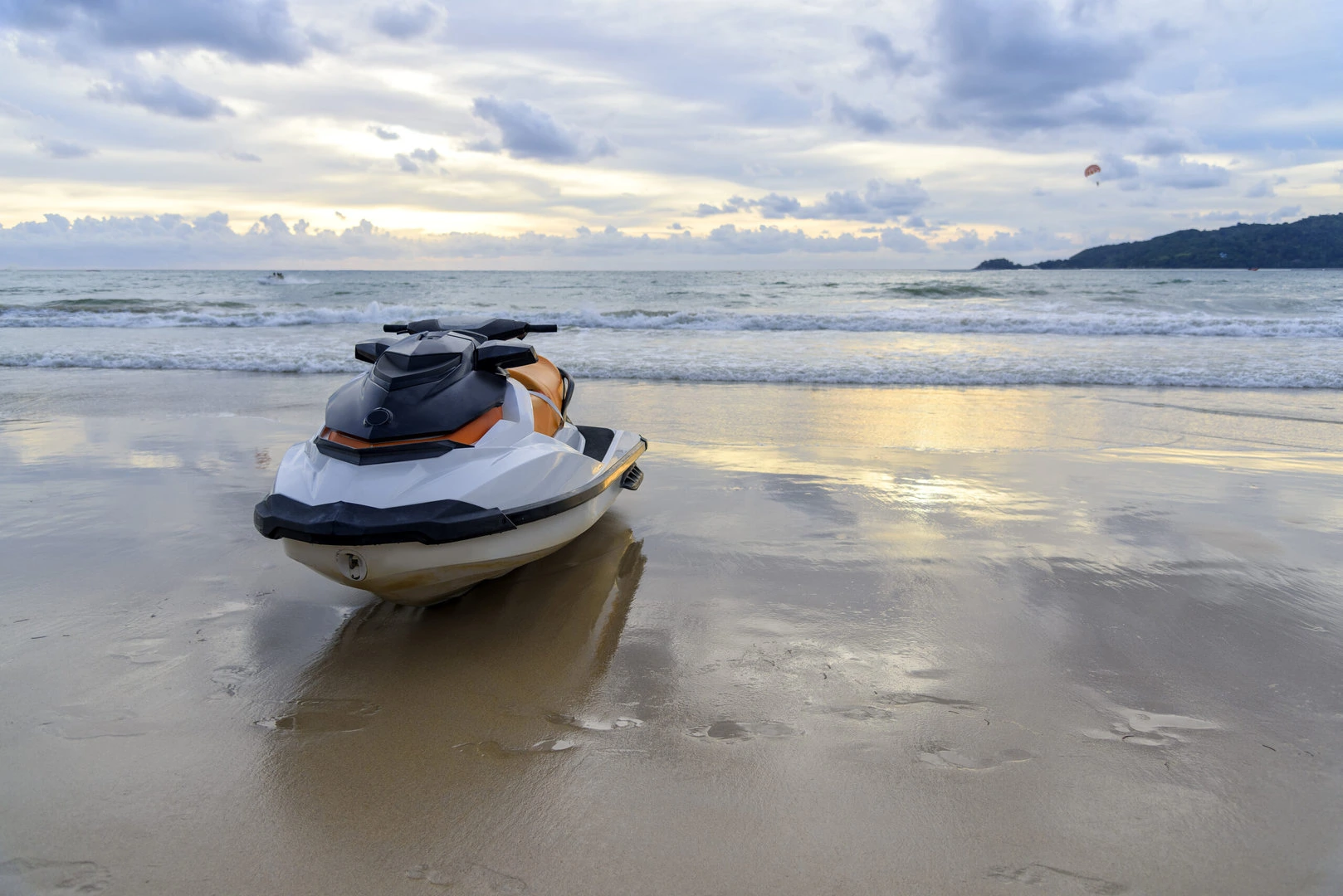
No experience needed. Every session starts with a safety briefing covering how to operate the jet ski, hand signals, and what to do if you fall off (you get back on). The jet skis are intuitive and most people are comfortable within the first few minutes.
Age requirements. Passengers must be 7 years or older. To drive the jet ski on safari tours, check the specific age requirement when booking (usually 16 or 18 depending on the tour).
What to bring. Swimwear, towel, and sunscreen. A waterproof phone case if you want to take photos. The operator also offers a photo and video service during the tour (€20 to €30, arranged and paid on site, not through CanaryVIP).
What to wear. Swimwear is fine. Wetsuits are available free of charge if the water feels cold or you prefer extra protection. You will get wet.
Best time of day. Morning sessions tend to have calmer water. Late afternoon can be pleasant too, with softer light and fewer people on the water. Midday is hottest and the sea can be choppier.
Cancellation. Free cancellation up to 48 hours before the tour (72 hours for larger group bookings). If weather or sea conditions are unsafe, the tour is rescheduled or fully refunded.
Dolphins. On the longer tours (2h and 2.5h), you may see bottlenose dolphins along the way. It’s not guaranteed on every ride, but it happens regularly. The instructor knows the areas where they’re most often seen.
Other water sports in Tenerife
If jet skiing isn’t your thing, or you want to try something else during your trip, CanaryVIP also offers:
Kayaking with sea turtles in the sheltered bays near Los Cristianos. Scuba diving at volcanic reef sites with good visibility. Parasailing, flyboarding and Banana Water Ride. See the full water sports section for all options.
For a completely different way to experience the coast, a boat trip with whale watching or a private yacht charter lets you cover the same coastline at a more relaxed pace.
Book jet ski tours in Tenerife from €85
The post Jet ski tours in Tenerife: routes, prices, and what to expect (Updated April 2026) appeared first on CanaryVIP.com.
]]>The post How to Swim with Dolphins in Tenerife appeared first on CanaryVIP.com.
]]>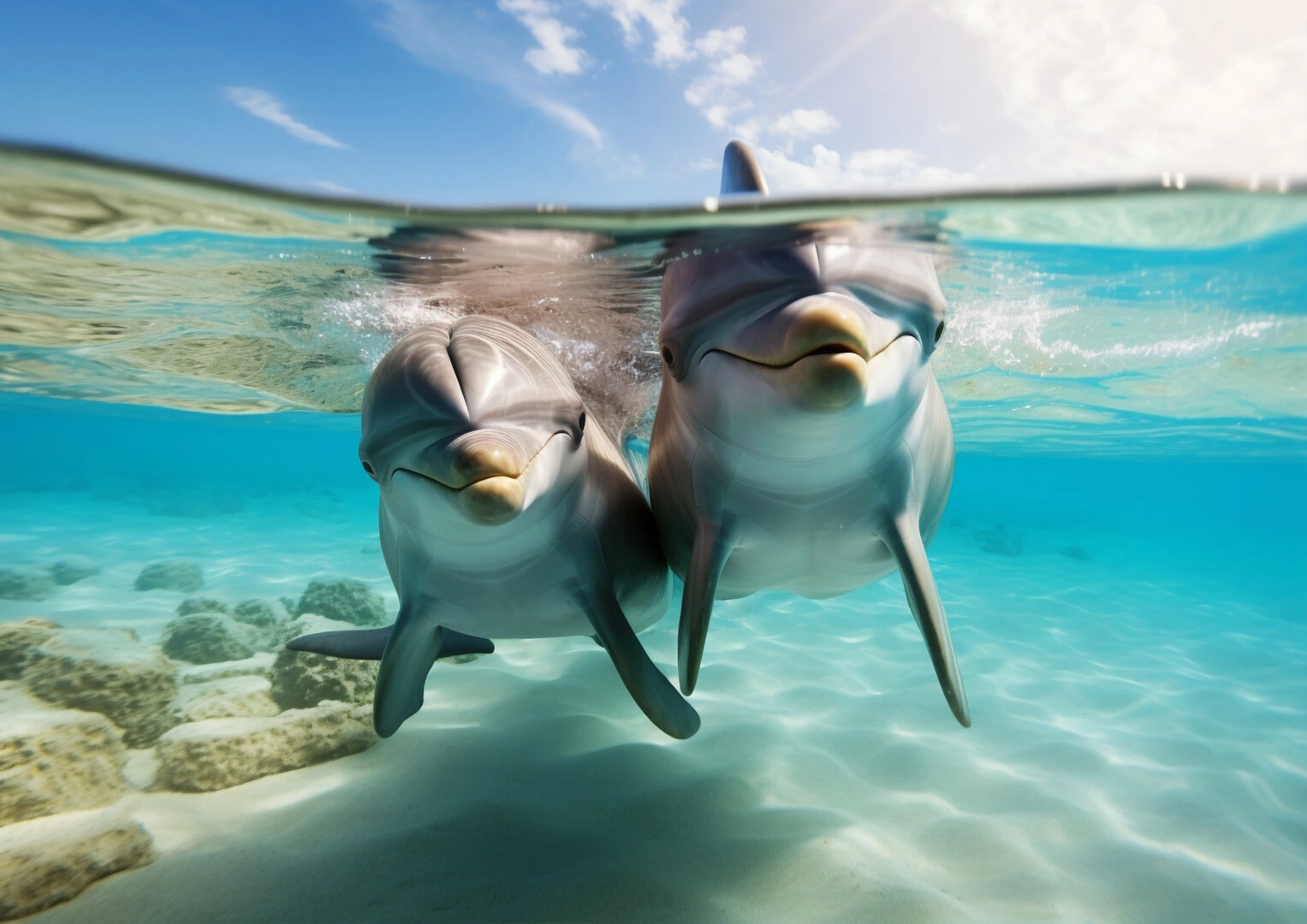
Tenerife is one of the best places in Europe to see dolphins, but it is important to know that swimming with dolphins is NOT allowed in Tenerife or anywhere in the Canary Islands. Unlike other tourist destinations around the world, the Canary Islands are strongly committed to the protection of dolphins and whales. For this reason, you cannot swim, bathe, or interact freely with them in the ocean.
Instead, Tenerife offers different ways to enjoy and learn about dolphins responsibly: educational shows in animal parks, close encounters under supervision, and guided boat excursions to see dolphins and pilot whales in the wild.
Dolphin Show and Encounter at Aqualand Tenerife
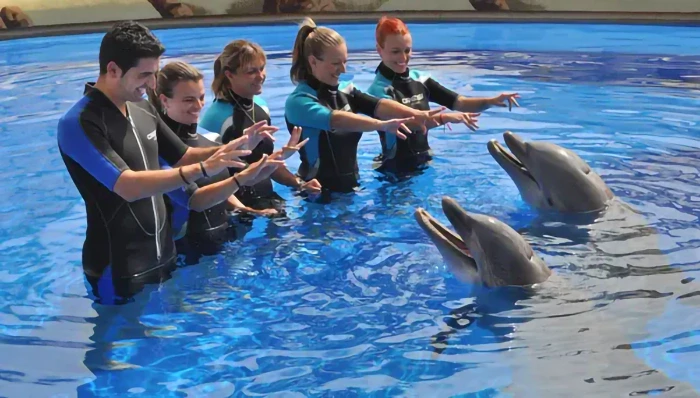
Aqualand Costa Adeje is a popular water park and home to one of the most highly rated dolphin shows in Europe. Visitors can watch dolphins perform impressive behaviors while also learning about their intelligence, communication, and relationship with their trainers.
In addition to the show, Aqualand offers a special program called the Dolphin Encounter. This is not swimming with dolphins, but rather a chance to get close to them under the guidance of professional trainers. You can learn about their diet, behaviors, and conservation while being just a few steps away from these wonderful animals.
It is important to note that the Dolphin Encounter can only be booked upon arrival at the park. Spaces are limited, so visitors interested in this activity should plan to secure it early in the day.
Dolphins at Loro Parque
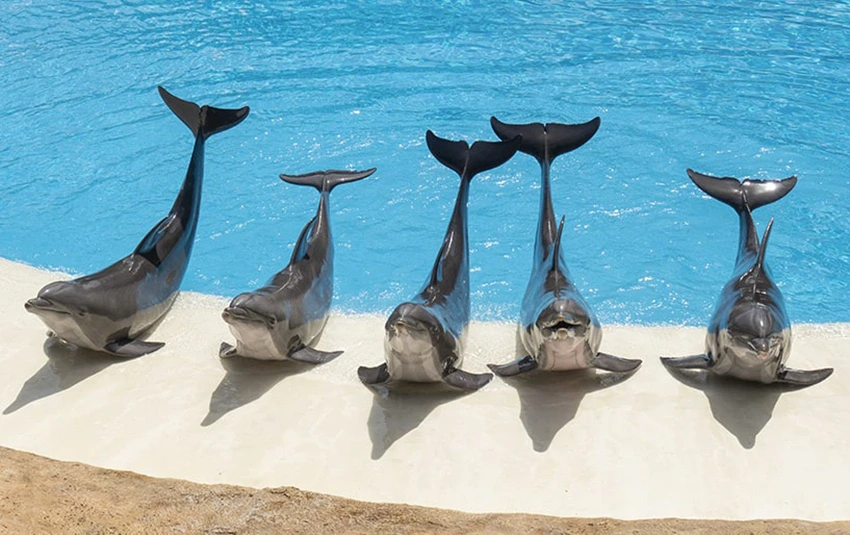
Loro Parque, located in Puerto de la Cruz, is world-renowned for its dedication to animal welfare and conservation. Here, visitors can enjoy an unforgettable dolphin show where the animals demonstrate their agility and intelligence in a large pool designed to replicate their natural environment as closely as possible.
At Loro Parque, there are no swimming or direct encounter programs with dolphins. Instead, the park focuses on education and raising awareness about the importance of marine conservation. The shows highlight how extraordinary dolphins are while also delivering a clear message: they are species that must be respected and protected.
Wild Dolphin and Pilot Whale Watching in Tenerife
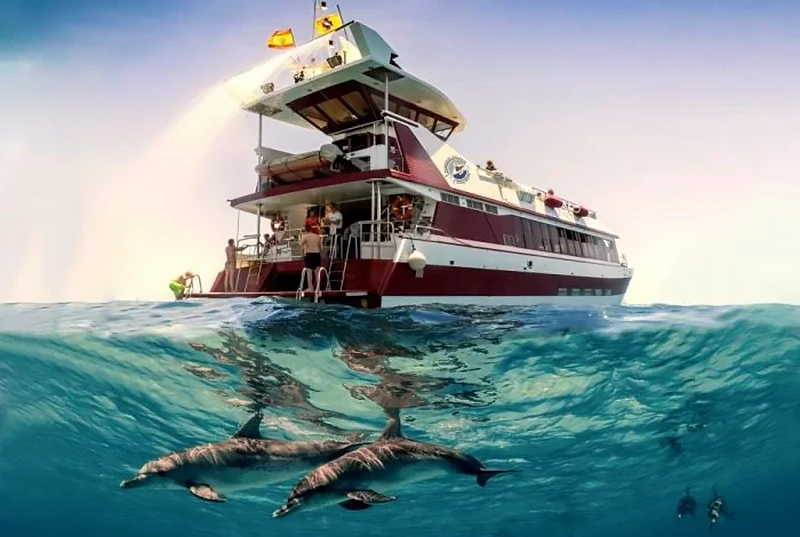
Tenerife is one of the best places in Europe for dolphin and whale watching tours. From harbors such as Puerto Colón, Los Cristianos, and Los Gigantes, multiple licensed boats depart daily to observe dolphins and pilot whales in their natural habitat.
One of the most common residents is the bottlenose dolphin, but Tenerife is also famous for its population of pilot whales, which live permanently off the coast. Depending on the season, visitors may also see other species passing through the waters of the Canary Islands.
These tours are strictly regulated. Only boats with the official “Barco Azul” license are authorized to approach dolphins and whales. The rules are clear:
- You cannot swim with dolphins or whales in the ocean.
- You cannot touch, feed, or disturb them.
- Boats must keep a respectful distance to ensure the animals are not stressed or forced to change their behavior.
This regulation ensures that visitors can enjoy an authentic and unforgettable experience while guaranteeing the safety and well-being of the dolphins and whales.
Why Swimming with Dolphins Is Not Allowed
Many travelers wonder why Tenerife does not allow swimming with dolphins like in other parts of the world. The answer is simple: the Canary Islands prioritize the protection of cetaceans over tourist entertainment.
Allowing tourists to swim with dolphins would disrupt their natural behavior, cause unnecessary stress, and risk their health. Instead, Tenerife promotes encounters that are ethical, sustainable, and respectful.
By watching dolphin shows in controlled environments and joining whale watching tours with licensed operators, visitors can learn more about these fascinating animals while contributing to their conservation.
Conclusion: The Best Way to See Dolphins in Tenerife
In Tenerife, you cannot swim with dolphins, but you can still enjoy incredible experiences:
Aqualand Tenerife: Dolphin show and the chance to book the Dolphin Encounter at the park.
Loro Parque: Educational dolphin shows that focus on awareness and conservation.
Whale and dolphin watching tours: See dolphins and pilot whales in the wild with licensed Barco Azul boats.
These options make Tenerife one of the top destinations in Europe for observing dolphins in a responsible and ethical way. Protecting marine life is part of the Canary Islands’ philosophy, ensuring that both visitors and dolphins benefit from every encounter.
The post How to Swim with Dolphins in Tenerife appeared first on CanaryVIP.com.
]]>The post Stargazing in Tenerife: the Teide by Night experience and why these skies are special appeared first on CanaryVIP.com.
]]>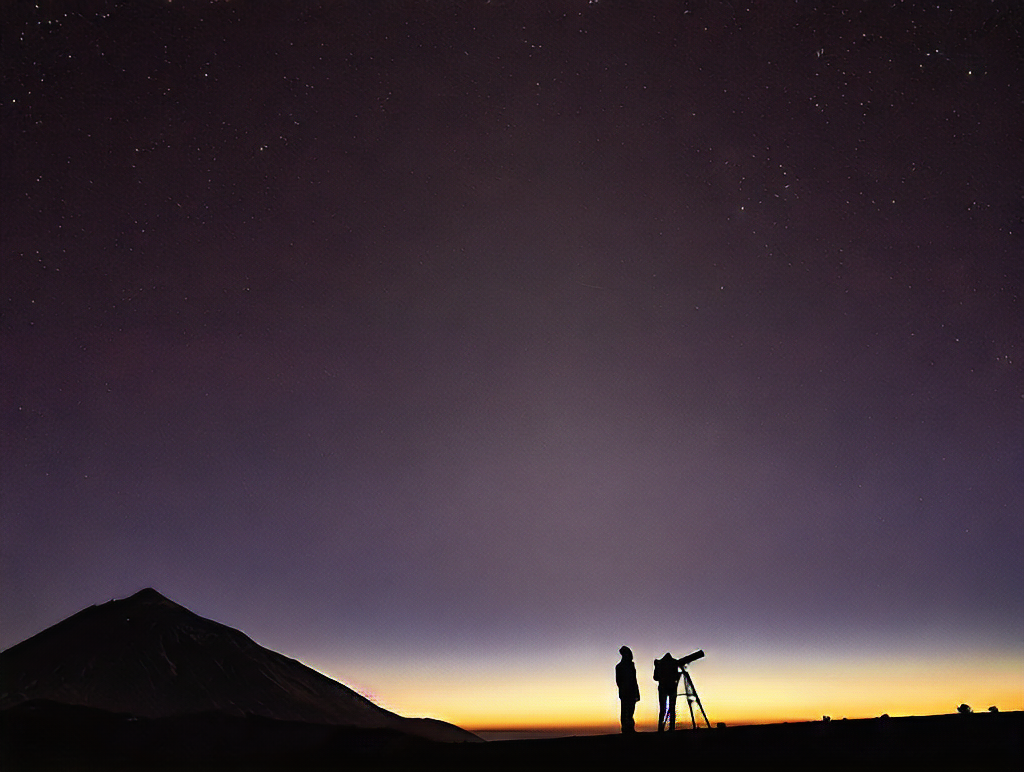
Why Teide National Park is one of the best places on earth to see the stars
Mount Teide sits at 3,718 metres above sea level. At that altitude, you’re above the cloud layer that often sits between 1,200 and 2,000 metres over Tenerife. This means that even when the coast is overcast, the sky above Teide can be perfectly clear.
That’s the main reason the Instituto de Astrofisica de Canarias (IAC) built the Teide Observatory here in 1964. It sits at 2,390 metres and houses telescopes from over 60 institutions in 19 countries. The 1.5-metre GREGOR telescope is the largest solar telescope in Europe. In 1995, astronomers at this observatory discovered Teide-1, the first confirmed brown dwarf, using the IAC-80 telescope.
For regular visitors, what matters is this: Teide National Park was the first UNESCO World Heritage Site to also be certified as a Starlight Tourist Destination by the Starlight Foundation (backed by UNESCO, the World Tourism Organization, and the International Astronomical Union). The Canary Islands also have a specific law, the “Ley del Cielo” (Sky Law), in force since 1992, which controls light pollution, radio interference, air pollution, and flight paths in the area to protect the quality of the night sky.
The result is that on a clear night at Teide, you can see around 83 of the 88 officially recognised constellations. The Milky Way is visible to the naked eye as a dense band across the sky. Planets, nebulae, and star clusters that are invisible from most of Europe are clearly visible here.
What you can actually see

The Milky Way. Visible to the naked eye from Teide on clear, moonless nights. The galactic core is most visible during summer and early autumn (June to October). From Teide’s altitude, the detail is remarkable: you can see the dust lanes, bright star clouds, and the overall structure of our galaxy without any optical equipment.
Planets. Jupiter, Saturn, Mars, and Venus are regularly visible depending on the time of year. Through a telescope, you can see Saturn’s rings and Jupiter’s moons.
Constellations. Teide’s latitude (28°N) means you can see constellations from both the northern and parts of the southern sky. Orion, the Pleiades, Scorpius, and the Southern Cross (just barely, at certain times of year) are all observable.
Meteor showers. The Perseids (August) and the Geminids (December) are the two major annual meteor showers visible from Teide. During peak nights, you can see dozens of meteors per hour. The absence of light pollution makes even faint meteors visible.
Deep sky objects. Through a telescope, nebulae (like the Orion Nebula), galaxies (like Andromeda), and star clusters are visible with impressive clarity from this altitude.
The CanaryVIP stargazing tour: what’s included
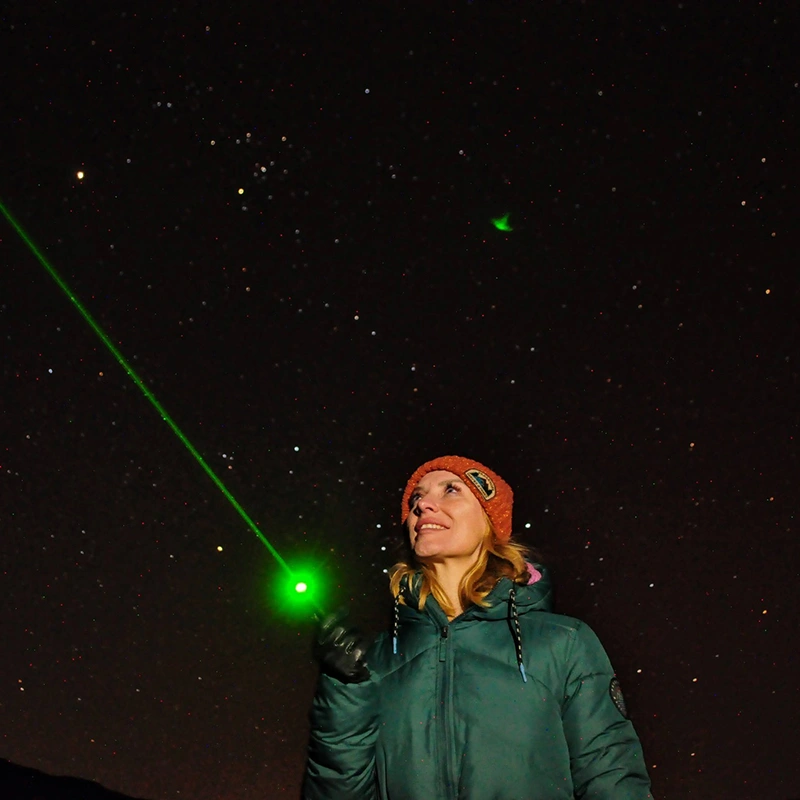
The Teide by Night stargazing tour available through CanaryVIP is one of the most popular evening excursions on the island. Here’s what it includes:
Hotel pickup and drop-off. From south Tenerife (Costa Adeje, Playa de las Américas, Los Cristianos).
Sunset at Teide. The tour arrives at the national park in time for sunset. Watching the sun drop below the cloud layer from 2,000+ metres is one of those moments that’s hard to describe without sounding like a travel brochure, so I’ll just say: bring a camera.
Dinner. A Canarian meal is included, usually served at a local restaurant such as Casa Sira (the exact restaurant may vary depending on availability). Wine and other drinks are included. Dietary requirements can generally be accommodated.
Stargazing with professional telescopes. Once it gets dark, the guide explains the constellations using a laser pointer, then sets up telescopes for observing planets, star clusters, nebulae, and other deep sky objects. The guides are Starlight-certified, which means they’ve been trained and accredited by the Starlight Foundation specifically for astrotourism.
Duration. Around 6 hours total.
Days. Tuesday, Wednesday, Thursday, Friday, and Sunday.
Languages. Tours run in multiple languages. Each bus operates in one language only, so you’re not listening to the same explanation repeated three times.
Cancellation. Free cancellation up to 48 hours before. If weather conditions make stargazing impossible, the tour is rescheduled or refunded.
Important weather note. Visibility depends on weather conditions and can’t be guaranteed. Cloud cover at altitude, calima (Saharan dust), and moon phase all affect what you can see. New moon nights offer the darkest skies. The tour operator monitors conditions and will contact you if a reschedule is needed.
What to bring
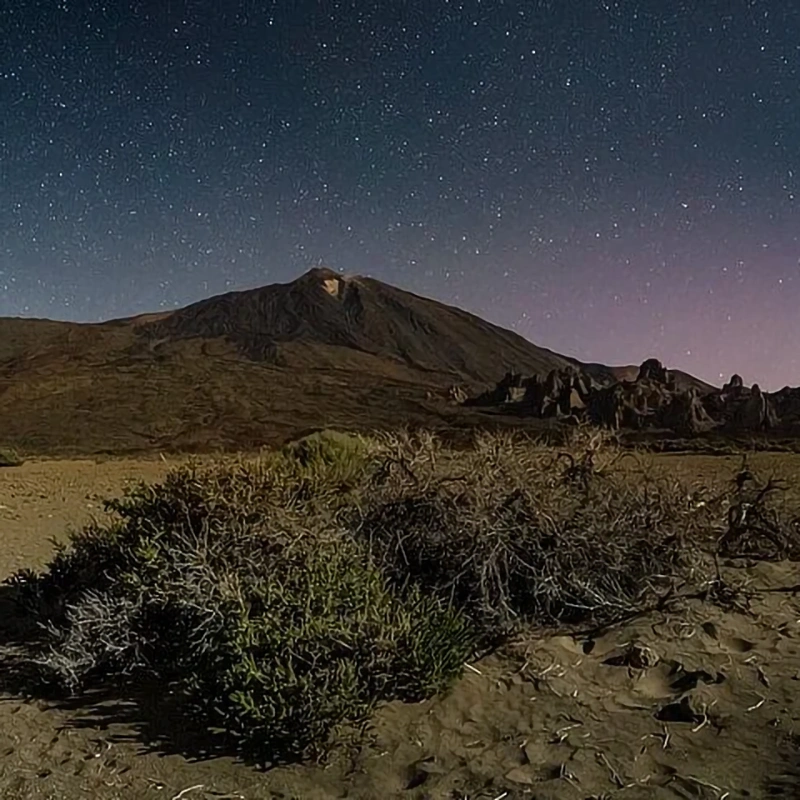
Warm clothing. This is not optional. At 2,000+ metres after dark, temperatures regularly drop to 5 to 10°C even in summer. In winter it can be near freezing. Bring a proper jacket, long trousers, and closed shoes. Gloves and a hat are a good idea in winter months. Several layers work better than one thick coat.
A camera or phone. Modern phones can capture surprisingly good night sky photos using night mode or long exposure settings. A tripod helps if you have one, though it’s not essential for the guided tour.
No torch (or use a red one). White light ruins your night vision (it takes about 20 minutes for your eyes to fully adapt to darkness). If you need a light, use a red-filtered torch or the red light setting on your phone.
Best time of year for stargazing at Teide
Stargazing is possible year-round at Teide, but conditions vary:
Summer (June to September). The Milky Way core is visible, nights are warmer (though still cold at altitude), and skies are generally clear. The Perseids meteor shower in August is a highlight. This is peak season for stargazing tours.
Autumn (October to November). Still good conditions. Fewer tourists. The Milky Way core begins to set earlier in the evening.
Winter (December to February). The coldest period at altitude, but winter skies can be exceptionally clear. The Geminids meteor shower in December is one of the best of the year. Dress very warmly.
Spring (March to May). Variable conditions. The occasional calima (Saharan dust event) can reduce visibility, though strong calimas only happen a couple of times a year at most.
For the darkest skies, check the moon phase before booking. Nights around the new moon are best. A full moon washes out fainter objects and the Milky Way.
The Teide Observatory: a separate visit
The Teide Observatory (Observatorio del Teide) at Izaña is a working research facility, not part of the stargazing tour. It’s open to the public for daytime guided visits several days a week (March to December), run in partnership with the Volcano Teide organisation. These visits include a talk on the electromagnetic spectrum, viewing the sun through solar telescopes, and a tour of selected telescope installations.
The observatory covers 50 hectares and has been operating since 1964. It’s mainly dedicated to solar research and houses the best collection of European solar telescopes, including GREGOR (1.5m, the largest solar telescope in Europe).
If you’re interested in astronomy, the daytime observatory visit and the nighttime stargazing tour are two different experiences that complement each other well.
Other evening activities in Tenerife
If the stargazing tour appeals but you also want other evening options during your stay, CanaryVIP offers:
The Scandal Dinner Show (cabaret and variety in Costa Adeje). Sunset boat trips along the south coast. Private yacht charters with custom timing. See the full evening shows and entertainment section.
Book the Teide stargazing tour
The post Stargazing in Tenerife: the Teide by Night experience and why these skies are special appeared first on CanaryVIP.com.
]]>The post How is the Quad Biking Tour in Tenerife (updated April 2026) appeared first on CanaryVIP.com.
]]>
Quad biking in Tenerife: what the Teide Quad Safari is actually like
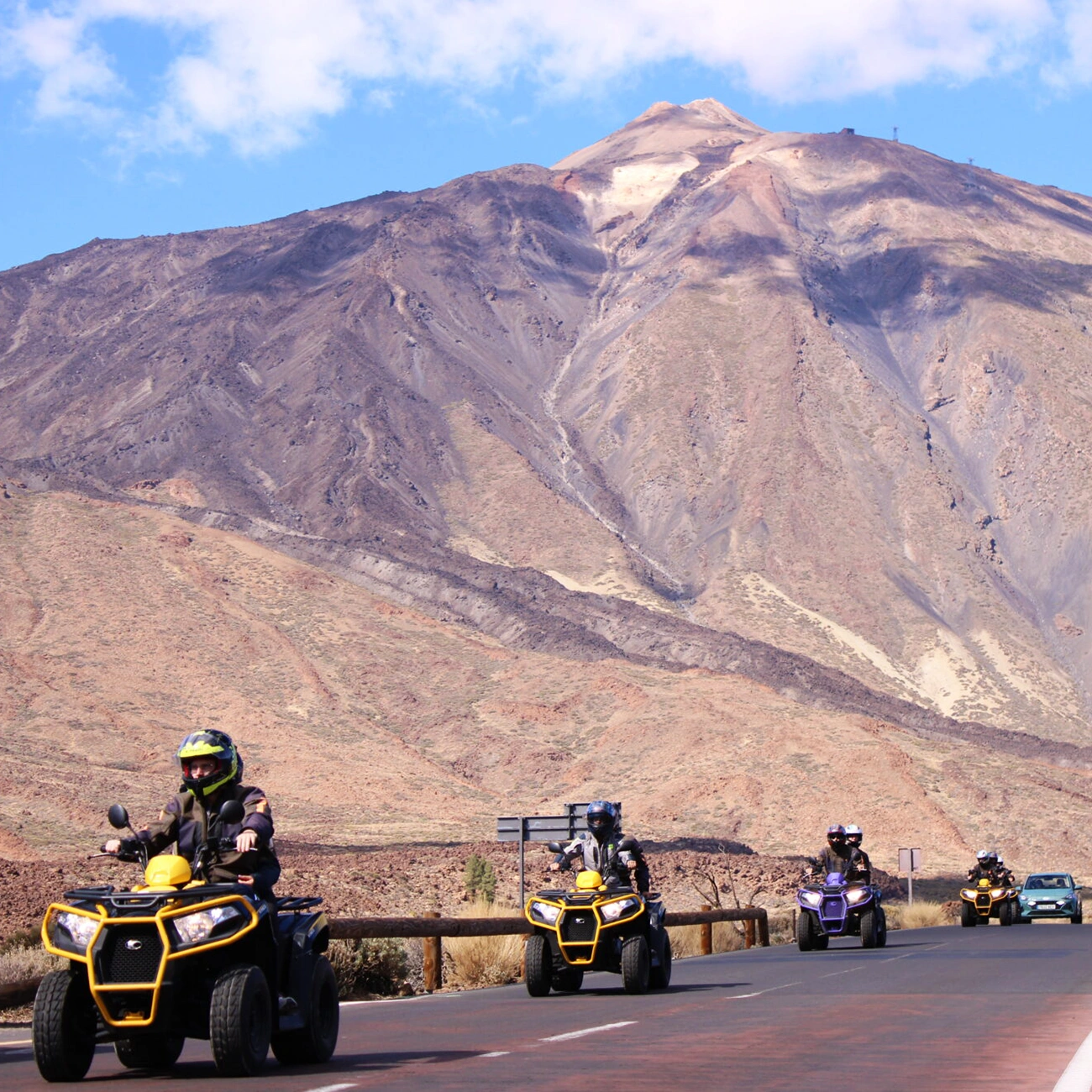
The Teide Quad Safari is one of the most popular excursions in south Tenerife and one of CanaryVIP’s best sellers. You ride a quad bike from the coast up through pine forests and volcanic landscapes into Teide National Park. The tour takes about 3 hours, runs daily (mornings and sunset departures), and the quads are fully automatic, so you don’t need any previous riding experience.
The route
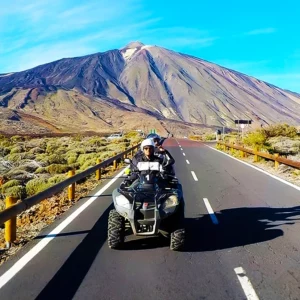
The tour starts from Chío or Guía de Isora (you’re collected from your hotel in south Tenerife and driven to the starting point). From there, the route heads uphill toward Teide National Park, passing through small mountain villages and changing landscapes as you climb.
The scenery shifts dramatically during the ride. You start in relatively green, cultivated hillside, move into the Corona Forestal pine forest that rings the volcano, and then break out into the open volcanic landscape of Las Cañadas del Teide. Pine forests, lava fields, and open sky in a single ride. The guides make multiple stops along the way at viewpoints for photos and to explain the geology and history of the area.
Mount Teide itself (3,718 metres, the highest peak in Spain) dominates the views from the higher sections of the route.
What you need to know before booking
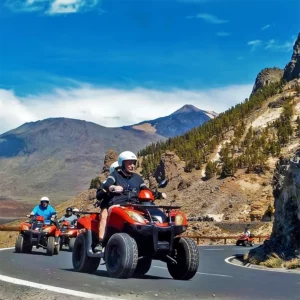
Driving licence required. The driver must be 18 or older and carry a valid driving licence (the original, not a photocopy).
Children from age 7. Kids aged 7 and over can ride as passengers on a double quad.
The quads are automatic. No clutch, no gears. You accelerate with your thumb. The guides give a full safety briefing before departure and provide all safety equipment including helmet and gloves.
Bring warm clothing. This is the most common thing people underestimate. At sea level in Costa Adeje it might be 25°C, but at altitude near Teide it can drop to single figures even in summer. Bring a proper jacket or hoodie. You’ll be glad you did, especially on the sunset tour.
Wear closed shoes and long trousers. No sandals, no shorts. Dust and gravel are part of the ride.
Hotel pickup and drop-off included. Free pickup from hotels in Costa Adeje, Playa de las Américas, and Los Cristianos. Allow roughly an hour each way for transport on top of the 3-hour tour.
Morning and sunset departures. The sunset option is popular because the light on the volcanic landscape is particularly good in the late afternoon and evening.
Multilingual guides. Tours run in multiple languages.
Cancellation. Free cancellation up to 48 hours before the tour. For group bookings of 4+ quads, cancellation requires at least 4 days’ notice.
Insurance. Basic insurance is included. Optional full coverage is available.
Who is it for?
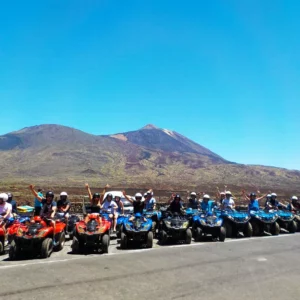
Anyone who wants to see a completely different side of Tenerife from what you get at the beach resorts. The ride is suitable for beginners (automatic quads, guided tour, paved roads with some off-road sections), but it’s still engaging enough to keep experienced riders interested. Couples, groups of friends, and families with older children (7+) all book this regularly.
The most common feedback from our customers: the views are excellent, the guides are good and take photos and videos of you during the ride, and the temperature drop at altitude catches people by surprise. The sunset tour in particular gets strong reviews for the light and atmosphere.
If you want something with more off-road time and less sightseeing, ask about the shorter Forest Explorer option which focuses more on dirt tracks through the pine forest.
Also worth considering
If you like the idea of exploring the volcanic landscapes but prefer a steering wheel over handlebars, the buggy safari covers similar terrain in a side-by-side buggy. Good for couples who want to ride together in a more car-like setup.
For other ways to explore the mountains, see our jeep tours and guided tours page.
Book the Teide Quad Safari from €98
The post How is the Quad Biking Tour in Tenerife (updated April 2026) appeared first on CanaryVIP.com.
]]>The post Tips for Navigating Public Transportation in Tenerife Like a Pro (updated April 2026) appeared first on CanaryVIP.com.
]]>Tenerife has a surprisingly good public transport network for an island its size. The bus system, run by TITSA, covers virtually the entire island, from the southern beach resorts to the mountain villages in the north. There’s also a two-line tram (operated by Metrotenerife) connecting Santa Cruz with La Laguna.
Whether you’re trying to get from the airport to your hotel, visit Teide National Park without renting a car, or simply save money on daily transport, this guide covers what you actually need to know.
The Basics: Buses and Trams

TITSA buses, known locally as guaguas (pronounced “wah-wahs”), are the main way to get around. The fleet is modern, air-conditioned, and easy to spot thanks to the distinctive green livery. Most buses are wheelchair accessible, and they run more or less on time.
The key routes tourists tend to use include Route 110 (Costa Adeje to Santa Cruz via the motorway, the main cross-island express), Route 40 (connecting Tenerife South Airport with Playa de las Américas, Costa Adeje, and Los Cristianos, running every 30 to 40 minutes), and Route 343 (up to Teide National Park from the south). For the north, Route 102 runs between Santa Cruz and Puerto de la Cruz.
The tram is useful if you’re spending time in the Santa Cruz to La Laguna area. It runs two lines and is included in the Ten+ card system (more on that below). Outside of that corridor, though, it’s all about the buses.
Both TITSA and Metrotenerife have apps and websites with real-time tracking, route planners, and schedule information. The TITSA app in particular is worth downloading before your trip. It lets you plan routes, check live arrival times, and see fare estimates.
How to Pay: The Ten+ Card

The smartest way to pay for buses and trams in Tenerife is with a Ten+ card (sometimes written as “Tenmas”). Here’s how it works:
The physical card costs €2 and can be bought at TITSA bus stations, tram stations, vending machines at both airports, and various authorised outlets around the island. At Tenerife South Airport, there’s also a Lycamobile shop just past baggage reclaim that sells them.
Once you have the card, you load it with credit (minimum €5, maximum €100, in €5 increments). Every time you board a bus, you tap the card on the reader. Fares are automatically deducted at a discounted rate: roughly 20% off for short journeys and up to 30% off for longer routes compared to paying cash. For example, the Costa Adeje to Santa Cruz route (Line 110) costs around €9.45 cash but only about €6.25 with the Ten+ card.
You can also use the Ten+ Móvil app on your phone instead of the physical card. It works the same way and saves you the €2 card fee.
Tourist day and week passes are also available: a 1-day unlimited pass costs €10 and a 7-day unlimited pass costs €50. These cover all TITSA buses and the tram across the entire island, including the Teide and Teno routes. They activate from your first tap and can be loaded onto the physical Ten+ card or the app.
If you’d rather not bother with a card at all, you can simply pay the driver directly with cash or a contactless bank card. Single ticket prices depend on the route. Same-day return tickets get a 10% discount on journeys over 20 km.
One important detail: children under 5 travel free. For older children, tourists pay the standard fare (discounted child cards are only available to residents).
Key Routes for Tourists

Here are the routes most visitors will find useful:
Route 40: Tenerife South Airport to Playa de las Américas, Costa Adeje, and Los Cristianos. This is the one you’ll probably take first. It runs every 30 to 40 minutes from early morning until about 10pm and connects the airport with all the main southern resorts.
Route 110: Costa Adeje to Santa Cruz (express via motorway). The fastest way to cross the island, useful for day trips to the capital or connecting to the tram for La Laguna.
Route 102: Santa Cruz to Puerto de la Cruz. The main north coast route, passing through some beautiful scenery.
Route 343: Costa Adeje to Teide National Park. A scenic mountain route. Bear in mind services are less frequent, so check the timetable carefully and plan your return.
Route 711: A night bus serving the airport corridor. Handy for late arrivals or early departures.
For remote areas like the Anaga mountains, Masca, or some of the smaller northern villages, bus services exist but run infrequently. In these cases, combining the bus with a guided tour can be a practical alternative. You get transport, a knowledgeable guide, and no worries about return schedules.
Is It Worth Getting Around Without a Car?
The honest answer: it depends on what kind of trip you want.
If you’re staying in the south (Costa Adeje, Playa de las Américas, Los Cristianos) and your plan is mainly beaches, excursions, restaurants, and maybe a day trip to Teide or Santa Cruz, the bus network handles all of that well. You don’t need a car. The main resort areas are well connected, and for specific activities like boat trips, water sports, or theme parks, most operators offer pickup from your hotel anyway.
If you want to explore the rural north, drive winding mountain roads, visit hidden beaches, or move freely between multiple areas in a single day, a rental car gives you much more flexibility. The bus can get you to the main towns, but the more remote and scenic spots (Masca village, the Anaga forest trails, the TF-436 mountain road) are either poorly served or not served at all by public transport.
A good middle ground: use buses for daily resort-area travel and book specific jeep tours or guided bus tours for the days you want to see remote areas. This way you avoid the cost and hassle of a rental car while still getting to see the best of the island.
Practical Tips
A few things worth knowing before you hop on your first guagua:
Tap in and tap out. If you’re using the Ten+ card or a tourist pass, remember to tap when boarding and when getting off. If you forget to tap out, you may be charged the maximum fare for that route.
Bus drivers accept contactless payments but may have trouble giving change for large notes. If paying cash, try to have coins or small bills ready.
The TITSA website’s English version is limited. Several experienced travellers recommend switching to the Spanish version for more complete information, especially on fares and timetables. Google Translate can bridge the gap.
Off-peak travel is more comfortable. Buses on popular routes (especially Route 110 and Route 40) can get crowded during morning and evening rush hours and at weekends. Travelling mid-morning or early afternoon is generally quieter.
Keep your belongings secure, particularly on busier routes and at the main bus stations in Santa Cruz and Costa Adeje.
Check timetables in advance for mountain routes. Services to Teide and Teno run much less frequently than coastal routes. Missing the last bus back means a very expensive taxi ride.
Frequently Asked Questions
Can you get around Tenerife without a car? Yes. The TITSA bus network covers all the main resort areas, airports, and most tourist attractions. For remote mountain areas, combine buses with guided tours for the best experience.
How much does the bus cost in Tenerife? Single fares range from about €1.25 for short journeys to €13+ for long cross-island routes (cash prices). The Ten+ card gives you 20 to 30% off those fares. Tourist day passes (€10) and week passes (€50) offer unlimited travel.
Where can I buy a Ten+ card? At both airports (vending machines near arrivals), TITSA bus stations, tram stations, and various kiosks and authorised shops. You can also download the Ten+ Móvil app and go fully digital.
Do Tenerife buses run at night? Limited night services exist on key routes (such as Route 711 serving the airport). Most regular routes stop running around 10 to 11pm. Check the TITSA app or website for specific last-bus times.
Is the week pass worth it? If you plan to take multiple bus journeys per day (for example, daily trips to the beach plus a Teide excursion and a day in Santa Cruz) the €50 week pass can save you money. For lighter use, loading €20 to 30 onto a standard Ten+ card is usually more cost-effective.
Explore Tenerife with CanaryVIP
While the bus network is great for getting around day-to-day, some of Tenerife’s best experiences are easier to enjoy as organised excursions. At CanaryVIP, we offer activities across the island, from whale watching boat trips and private boat charters to Teide quad safaris, theme park tickets, and evening shows.
Most excursions include hotel pickup, so you don’t need to worry about bus routes or timetables. Every booking comes with our Best Price Guarantee.
See all Tenerife excursions and activities
For more travel tips and island guides, visit the CanaryVIP blog.
The post Tips for Navigating Public Transportation in Tenerife Like a Pro (updated April 2026) appeared first on CanaryVIP.com.
]]>The post Best Locations in Tenerife for Windsurfers Considering Windy Conditions appeared first on CanaryVIP.com.
]]>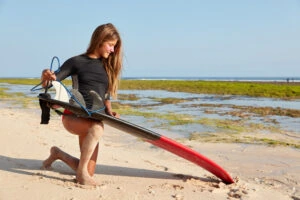
One of the most common questions people ask before visiting Tenerife is: is it too windy? The short answer is no — but it depends entirely on where you are on the island and what time of year you visit.
Tenerife’s wind conditions vary dramatically from one coast to another, and that’s actually one of its biggest strengths. The same island that offers world-class windsurfing and kitesurfing at El Médano also has calm, sheltered beaches in Costa Adeje where you can sunbathe without so much as a breeze ruffling your towel. Understanding this contrast is key to choosing the right spot for your holiday — or for planning a day of wind sports.
Why Tenerife Gets Wind (and Where)
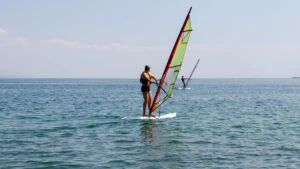
Tenerife’s wind patterns are driven by the northeast trade winds — prevailing winds that blow across the Atlantic and hit the island’s north and east coasts. Mount Teide, at 3,718 metres, acts as a massive wind block, which is why the south and west coasts are significantly more sheltered.
In practical terms, this means:
The north and east coasts (including El Médano, the Anaga coast, and much of the area around Santa Cruz) get consistent wind, especially in summer. This is great for wind sports but can make beach days less comfortable if you’re just looking to relax.
The south and west coasts (Costa Adeje, Playa de las Américas, Los Cristianos, Los Gigantes) are protected from the trade winds. These areas are calmer, warmer, and sunnier — which is exactly why the main tourist resorts are all located here.
This isn’t just a minor difference. You can drive 30 minutes from the windy shores of El Médano to the dead-calm waters of Costa Adeje. It’s like being on a different island.
El Médano: Tenerife’s Wind Sports Capital
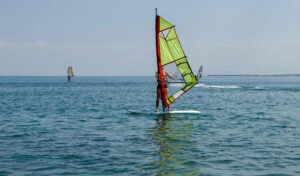
If you’re specifically looking for wind, El Médano is the place. This laid-back town on the southeast coast, about 10 minutes from Tenerife South Airport, is one of Europe’s top destinations for windsurfing, kitesurfing, and wingfoiling.
What makes El Médano special is the consistency of the wind. The northeast trades blow here around 300 days a year, typically ranging from 14 to 28 knots, with stronger gusts at times. The wide sandy beach provides plenty of launch space, the water has a sandy bottom (safer for beginners), and there are designated zones for kiting and windsurfing to keep things organised.
El Médano has a long history in competitive wind sports. It has hosted stages of the PWA World Tour (professional windsurfing) and local events like the King of El Médano kitesurfing competition. The town’s identity is built around these sports — you’ll find multiple schools, rental shops, and a social scene centred on the beach and its surf cafés.
For visitors wanting to try windsurfing or kitesurfing for the first time, El Médano’s schools offer lessons for all levels, typically with IKO-certified instructors. A beginner kite course usually runs 6–9 hours spread over several days. Equipment rental is widely available for experienced riders.
The town itself has a relaxed, slightly bohemian atmosphere — less polished than Costa Adeje but more authentic. There are good restaurants, a weekly market, and easy access to the nearby Montaña Roja nature reserve.
The Calm Side: Sheltered Resorts in South Tenerife
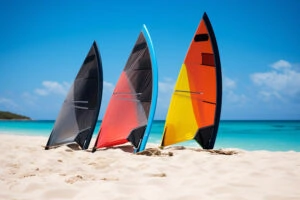
If wind is the last thing you want on your holiday, the southwest coast is where you should be. The main resort areas — Costa Adeje, Playa de las Américas, and Los Cristianos — sit in a wind shadow created by the mountains, meaning conditions are consistently calm.
Costa Adeje is the most upscale of the three, with high-end hotels, well-maintained beaches (Playa del Duque, Playa de Fañabé, Playa de Torviscas), and calm waters that are ideal for swimming, snorkelling, and paddleboarding. On most days, the sea here is flat or gently rolling — a world away from the wind-whipped waters of El Médano.
Los Cristianos has a more traditional feel, with a harbour that provides extra shelter. The main beach faces south and is well protected, making it one of the calmest spots on the island. It’s also the departure point for whale and dolphin watching boat trips and ferries to La Gomera.
Playa de las Américas sits between the two and has a livelier atmosphere, with good beaches that benefit from the same sheltered conditions.
These areas are where most of the water sports in Tenerife are based — activities like jet ski tours, kayaking with sea turtles, parasailing, and stand-up paddleboarding all operate in the calm waters of the southwest coast year-round.
When Is Tenerife Windiest?
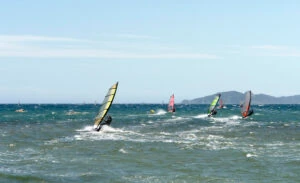
The windiest months in Tenerife are typically May through September, when the trade winds are at their strongest and most consistent. This is prime season for windsurfing and kitesurfing at El Médano, with reliable wind almost every day.
From October to April, winds are lighter and more variable. There are still plenty of windy days at El Médano — it’s a year-round spot — but the conditions are less predictable. For windsurfers and kitesurfers, winter can still deliver good sessions, but you might have the odd calm day mixed in.
For general holiday visitors, this seasonal pattern is actually good news. The winter months (when most northern Europeans visit Tenerife) tend to be the calmest. And since most visitors stay in the sheltered southwest resorts, wind is rarely an issue at all — even in summer.
If you’re planning your trip around wind conditions, the key takeaway is simple: stay in the south for calm, visit El Médano for wind. The two experiences are just 30 minutes apart by car or bus.
Comparing the Coasts
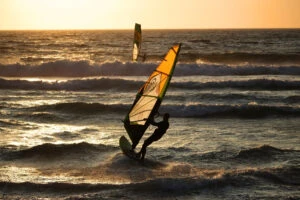
Here’s a quick breakdown of what to expect on each coast:
Southeast (El Médano area): Consistently windy, especially May–September. Wide sandy beaches, strong trade winds (14–28 knots typical). Best for windsurfing, kitesurfing, and wingfoiling. Less suitable for relaxed beach days if you don’t like wind.
Southwest (Costa Adeje, Playa de las Américas, Los Cristianos): Sheltered and calm year-round. Warm, sunny, and ideal for beach holidays, swimming, and calm-water sports like jet skiing, kayaking, and paddleboarding. This is where the main tourist infrastructure is.
West (Los Gigantes, Playa de la Arena): Generally calm and sheltered, with dramatic cliff scenery. Smaller, quieter resort areas. Good for a more relaxed alternative to the bigger southern resorts.
North (Puerto de la Cruz, Santa Cruz): More wind and cloud than the south, but less consistently windy than the east coast. The north coast has stronger currents and bigger waves — some beaches are better for experienced surfers than for casual swimming. The trade-off is a much greener, more dramatic landscape.
Northeast (Anaga coast): Wild, rugged, and exposed. Beautiful for hiking and scenery but not a beach holiday destination — the coastline here is mainly rocky with limited access.
Water Sports in the Southern Resorts
You don’t need to go to El Médano to enjoy water sports in Tenerife. The calm southern coast is actually where the widest range of activities is available, precisely because the sheltered conditions make them accessible to everyone — not just experienced riders.
Popular options include jet ski tours along the Costa Adeje coastline, kayaking with sea turtles off the southern beaches, parasailing with views of the coast and mountains, and scuba diving at sites across the southwest. Boat trips are another highlight — the waters between Tenerife and La Gomera are home to resident pilot whales and bottlenose dolphins, and sighting rates on excursions are very high.
For something different, self-drive boat hire (no licence required) lets you explore the coast at your own pace, and private boat charters are a great option for groups or special occasions.
The beauty of the southern coast is that these activities run year-round, thanks to the consistently calm sea conditions and mild water temperatures (19–24°C depending on season).
Beach Tips for Visiting Tenerife
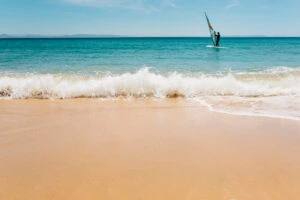
A few practical things worth knowing about Tenerife’s beaches:
Sun protection matters more than you think. The Canary Islands sit at a relatively low latitude (28°N) and the UV index is high year-round — even on overcast days and especially in summer. Wear high-factor sunscreen and reapply after swimming. Sunburn happens fast here, particularly on windy days when the breeze disguises how strong the sun is.
Beach flags are there for a reason. Red flags mean no swimming — not a suggestion, a rule. The southern beaches are generally safe, but northern and eastern beaches can have strong currents and undertow. Always check conditions before getting in the water, especially on unfamiliar beaches.
Many beaches have sunbed and parasol rental. Prices are typically €3–6 per item per day on the main resort beaches. Some beaches (like Playa del Duque) have more premium options.
Tenerife has black sand beaches too. The volcanic beaches — especially on the north and west coasts — have striking dark sand. It absorbs more heat than golden sand, so walking barefoot at midday can be uncomfortable. Bring flip-flops.
Explore beyond the resort beaches. Some of Tenerife’s most beautiful spots are off the main tourist track — places like Playa de Benijo in Anaga, the natural pools of Garachico, or the vast Playa de la Tejita near El Médano. A rental car or a guided tour opens up the whole island.
Book Your Water Sports and Excursions
At CanaryVIP, we offer a wide range of water sports, boat trips, and private boat charters across the southern Tenerife coast. Whether it’s a jet ski tour, a sunset sailboat cruise, or a kayaking adventure with turtles, every booking comes with our Best Price Guarantee and most activities include hotel pickup.
Browse all Tenerife activities →
The post Best Locations in Tenerife for Windsurfers Considering Windy Conditions appeared first on CanaryVIP.com.
]]>